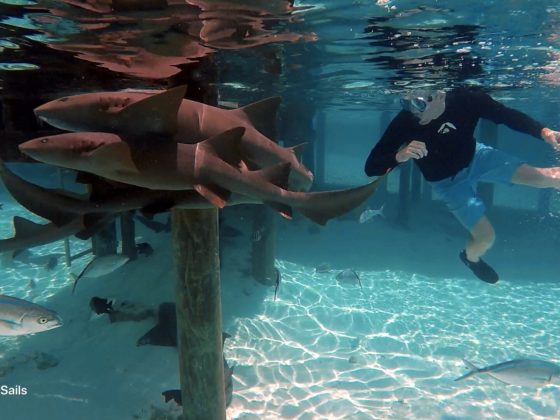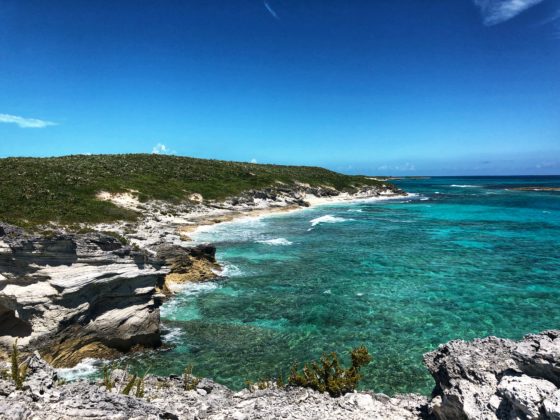
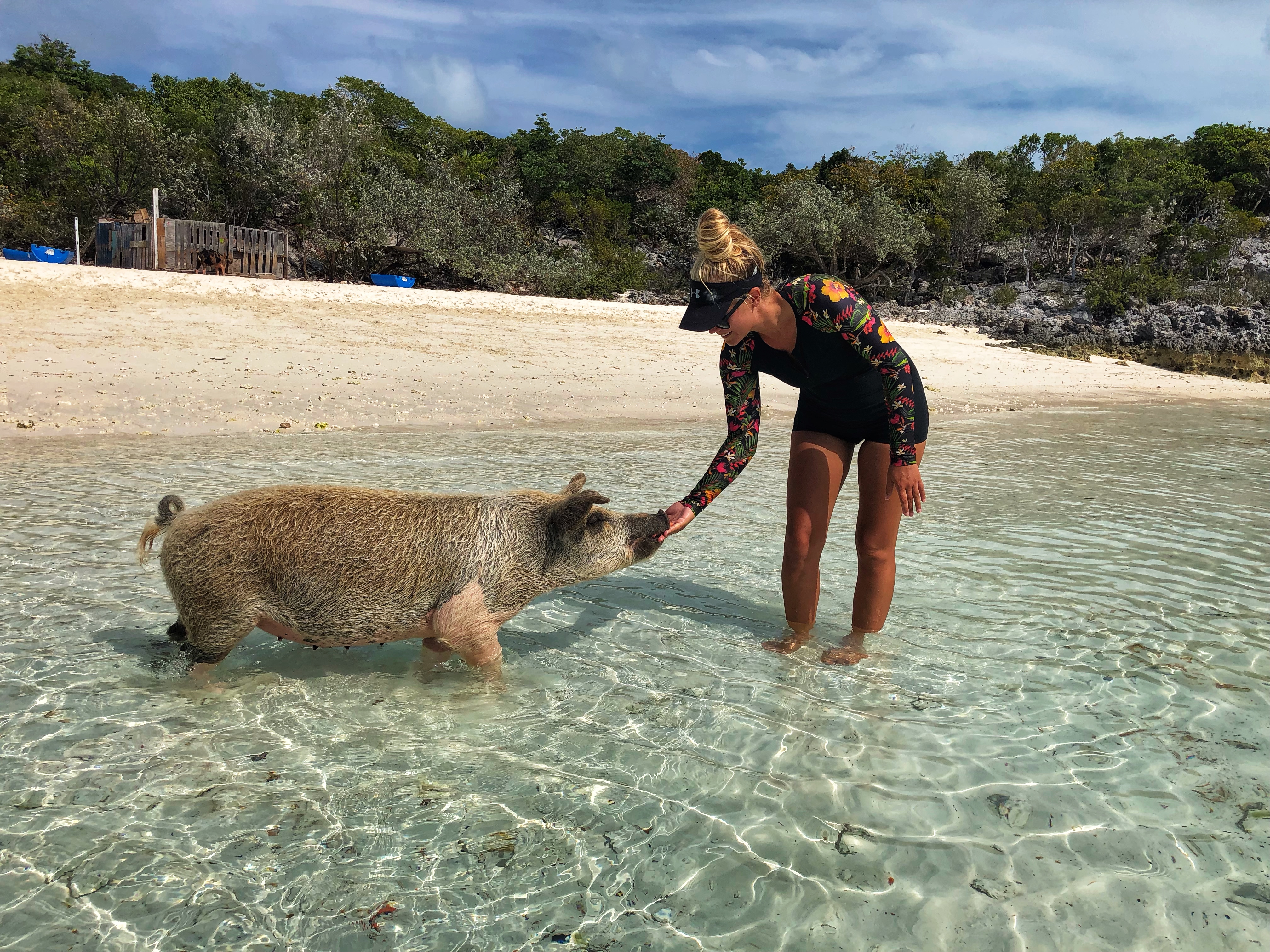
One of the first things that comes to mind when someone mentions the Exumas are the infamous swimming pigs. These are even more well-known than the nurse sharks we enjoyed so much. There are a few islands now that have pigs lined up on the beach as a tourist attraction, but the original pigs of the Exumas reside on Big Majors, which is right by Staniel Cay. This is also next to Thunderball Grotto – a popular snorkeling destination, which got its name from the 1965 James Bond film, “Thunderball,” which was shot here.
The Majors
After we say goodbye (or rather see you again soon!) to the nurse sharks at Compass Cay, we pull up our anchor and head south towards a pair of Cays known as “The Majors.” There’s the Big Major and the Small Major. There’s also another small cay next door, known as Fowl Cay. I understand there are a lot of islands and a lot of cays around the Bahamas, so some names are going to need to be reused. We literally just left a Fowl Cay 10 miles away though. You’d think we could have a little more creativity and less repetition in names so close together, but I digress. It’s a short trip, so we decide to just motor.
Tangent: When buying a sail boat, one of the key lines of thought is that majority of the time when moving the boat, you will be sailing it – moving by wind power alone. This is a more environmentally friendly and economical way of traveling. It’s also quite a romantic notion. Everyone loves to sell this version of sailing. What no one tells you (or at least not enough) is how painfully slow it (typically) is and how the wind never is the speed or direction that you need it to be. Hence why we motor SO MUCH. Even when we do sail, we often motor-sail to pick up speed and time. For several weeks now, I’ve been saying that we should have just bought a power catamaran. Our sailing catamaran has a better resale market, though. I have no idea if that’s actually true, but feels good to think. If you actually factor in the depreciation of the sails on a sailboat – there’s some strong arguments that sailing isn’t even cheaper than motoring after all! Hindsight is 20/20.
We’re heading for Big Major – for the pigs of course. We’ve read that the anchorage off of Big Major is a popular spot but pretty nice except for the constant tour boat traffic. We only plan to stay for one night, so that seems like a great spot for us as it’s right by the pigs and a short dinghy ride from Thunderball Grotto and groceries on Staniel Cay. We arrive and drop anchor in front of a gigantic sailing catamaran – its beam (e.g. width) looked to be almost double ours!
There’s a beach straight ahead of us, where we can already see a couple pigs. There’s a second beach off to the side which has a funky, mis-matched set-up of patio furniture and umbrellas. We later find out that this is a cruisers meet-up spot. A popular place around happy hour for cruisers to BYOB and enjoy each other’s company. Noted for next time. There’s a third beach beyond this that is tranquil and empty. We earmark that beach for Monster’s trips to shore.
The pigs don’t swim
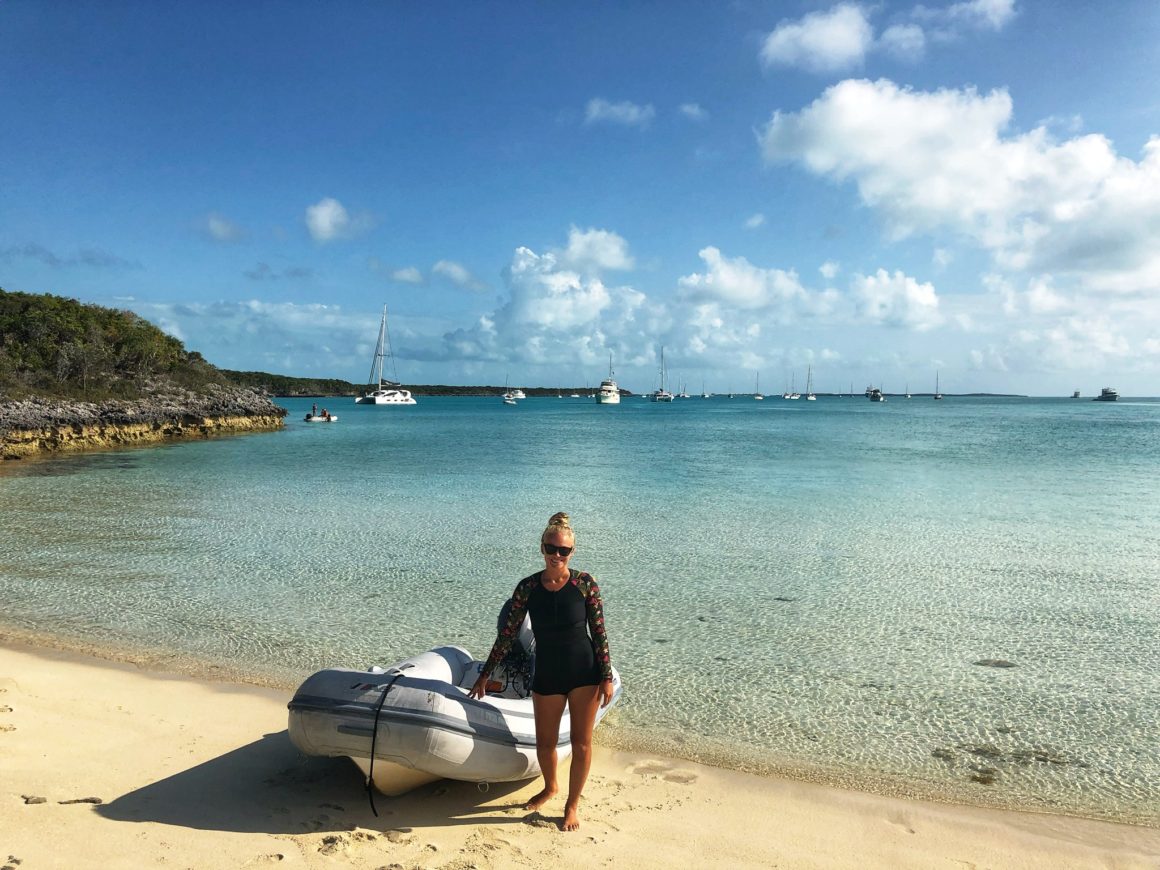
They are called the SWIMMING pigs of the Exumas. All the cool Instagram photos show the pigs swimming up to dinghies and people in the water. Maybe it’s because we didn’t bring them any snacks (I know, I know), but they refuse to swim for us. I feel a bit duped. To be fair though, we have a pretty good vantage point from our floating home and we never see them swim for anyone.
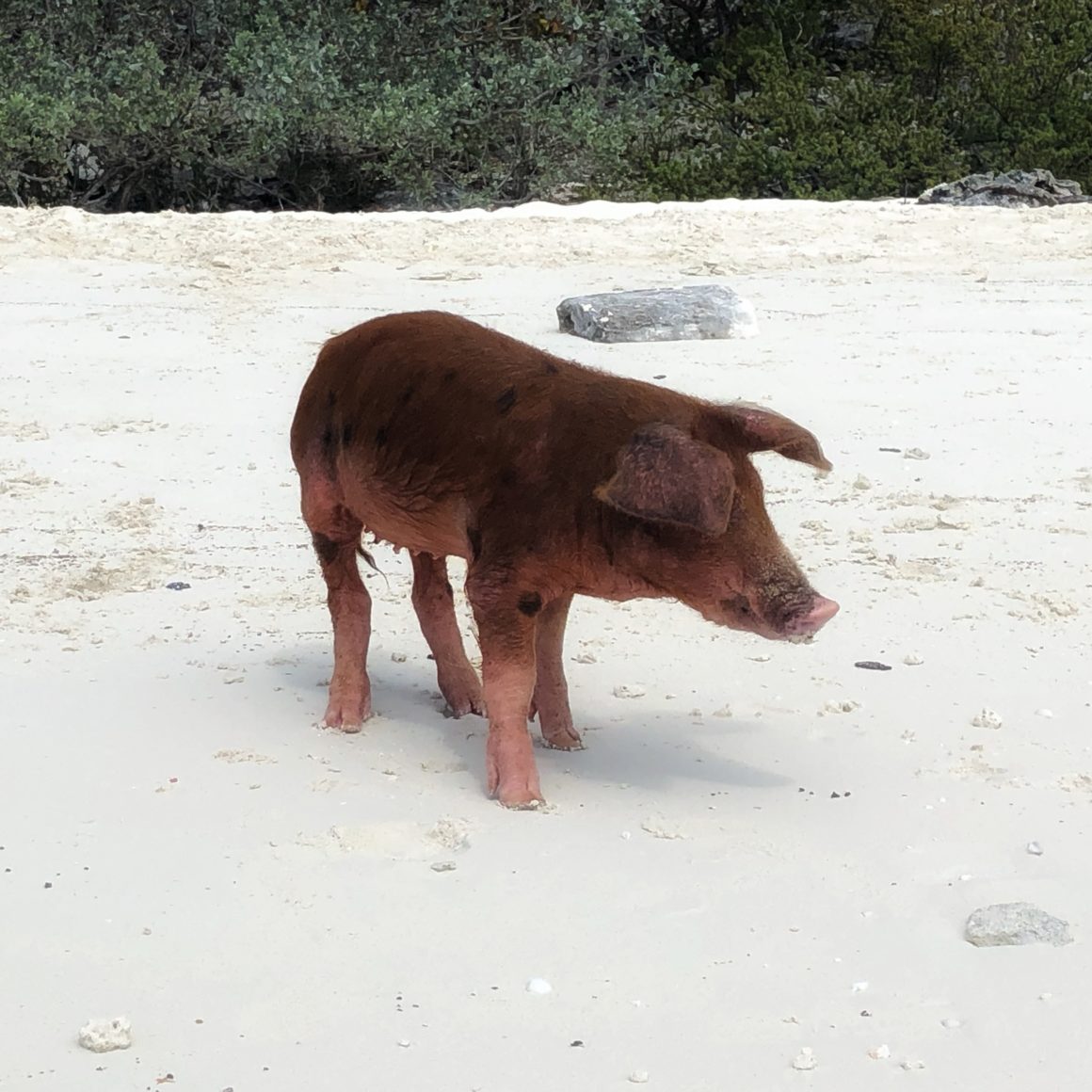
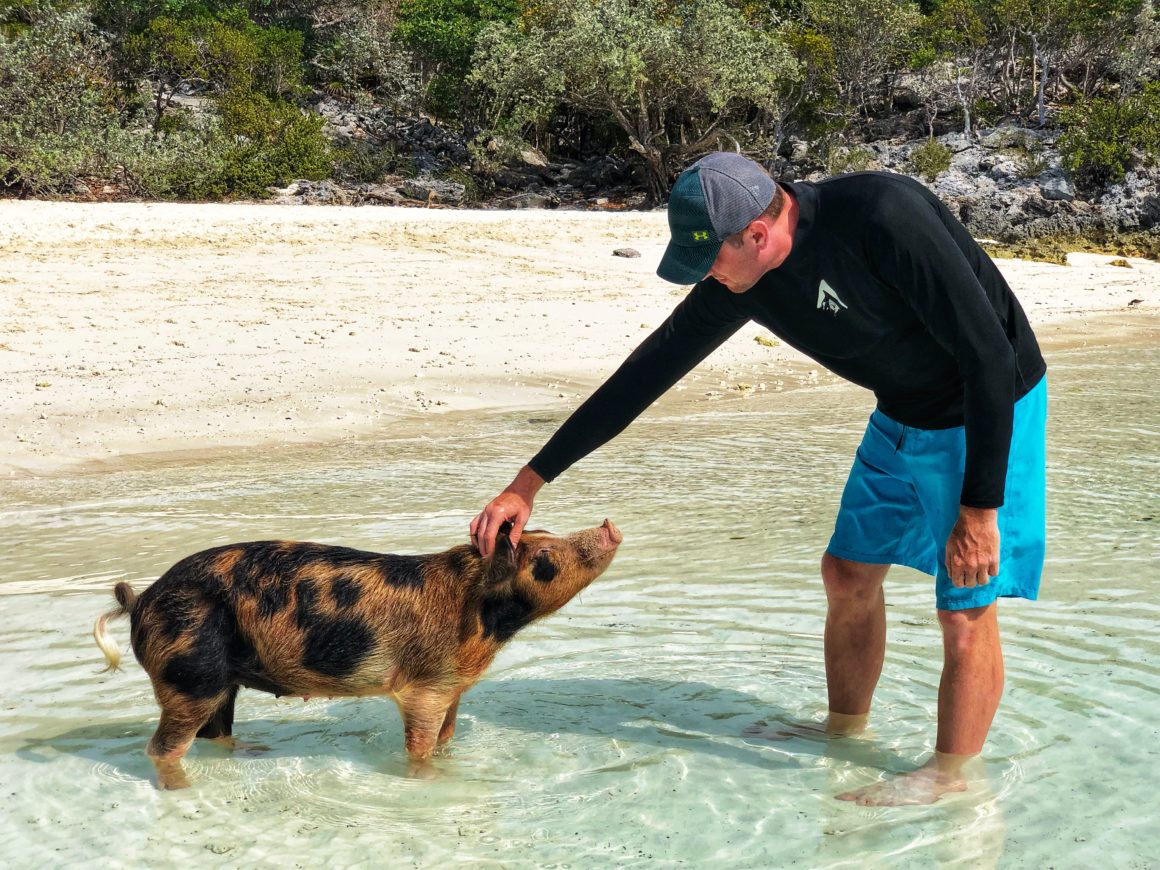
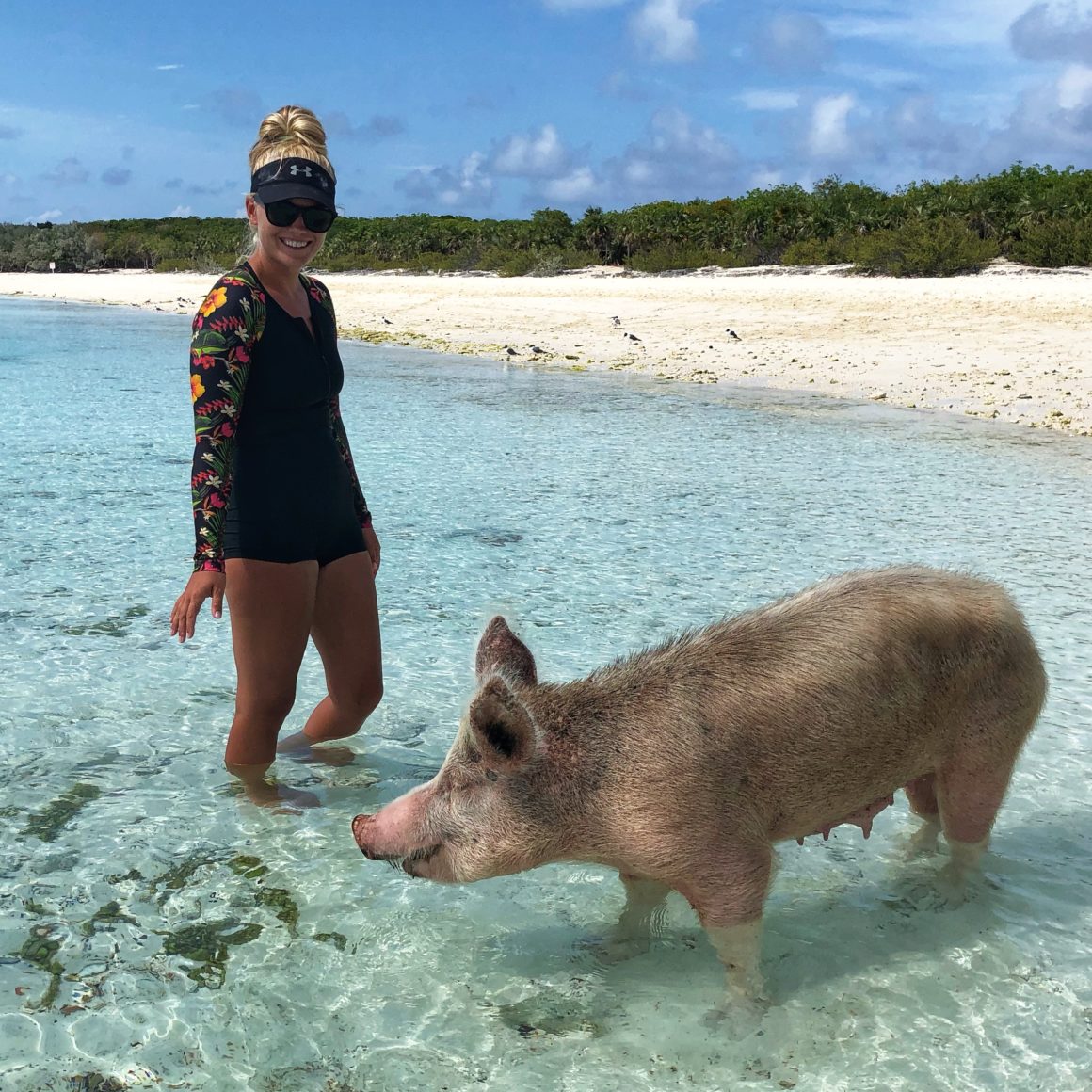
There are a couple that at least walked out into the shallow water to meet us. However, we notice that both of them relieve themselves – yep, in the water. So it’s unclear if they came to meet us or just came to use the bathroom – which apparently they do in the water. Not to be deterred by that somewhat disgusting realization, I set out to see if I can find any leftover snacks for them. I spot a carrot in the shallow water, pick it up and one of the pigs immediately reaches for it. Good to know – carrots are a yes. I set out to find more carrots, curious as to why the pigs aren’t doing that themselves. In all, I manage to snag 4 carrots which I graciously share with Matt so he can feed a pig as well.
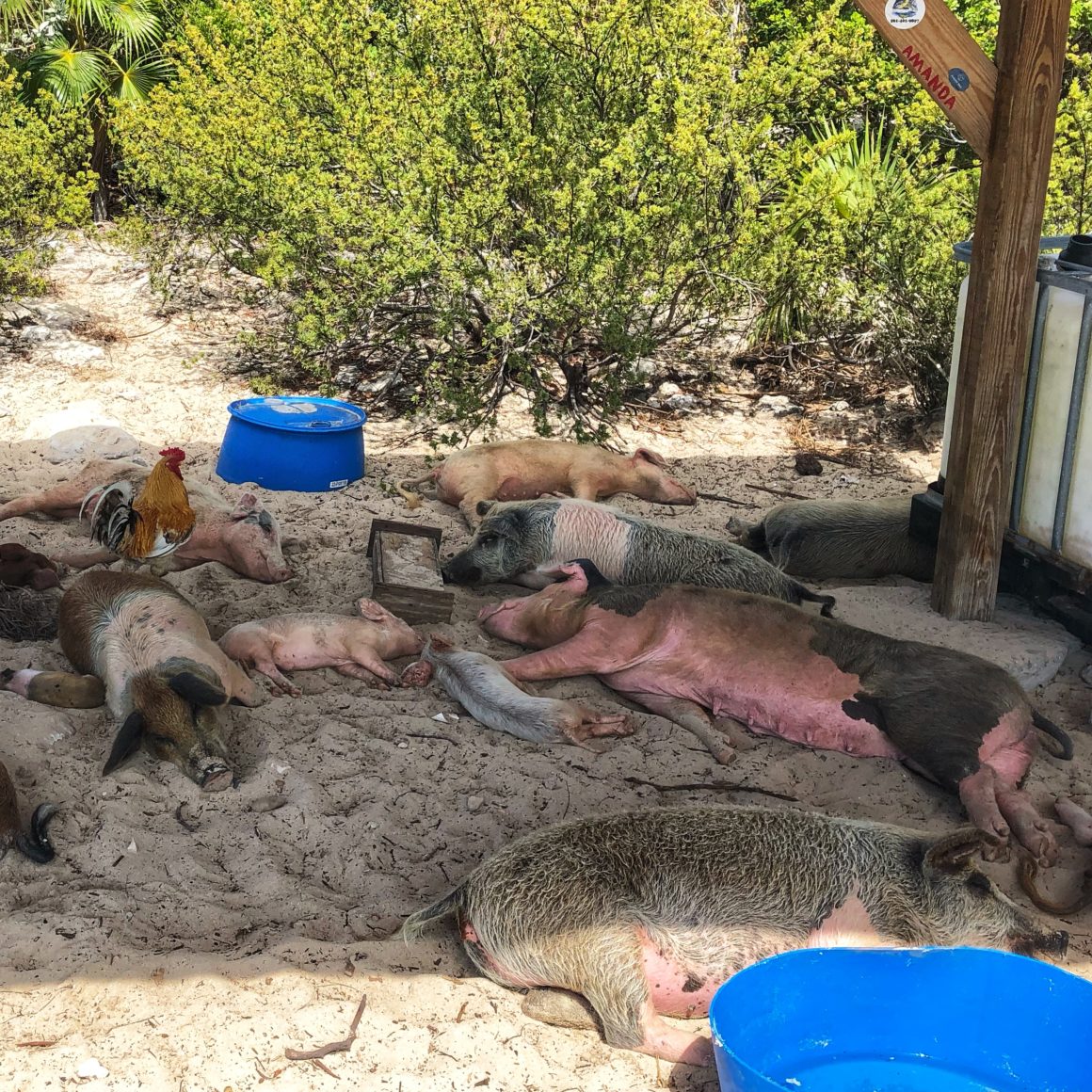
The pig that comes up to Matt is much cuter than mine – check out those spots in the photos below. Actually I feed my carrots to two different pigs, though they look very much alike without any unique identifiers. They’re also a bit bossy. After a while, we see one of the baby piglets wander out – so cute! We’ve heard it’s actually somewhat rare to spot one of the baby pigs. From what we can tell there are a few of them at this time, though. There is an area on the beach fenced off with small “doggy doors” that allow the smallest pigs to come and go. They spend much of their time in this protected area, where they have a feast of fruits and vegetables that the larger pigs aren’t able to steal.
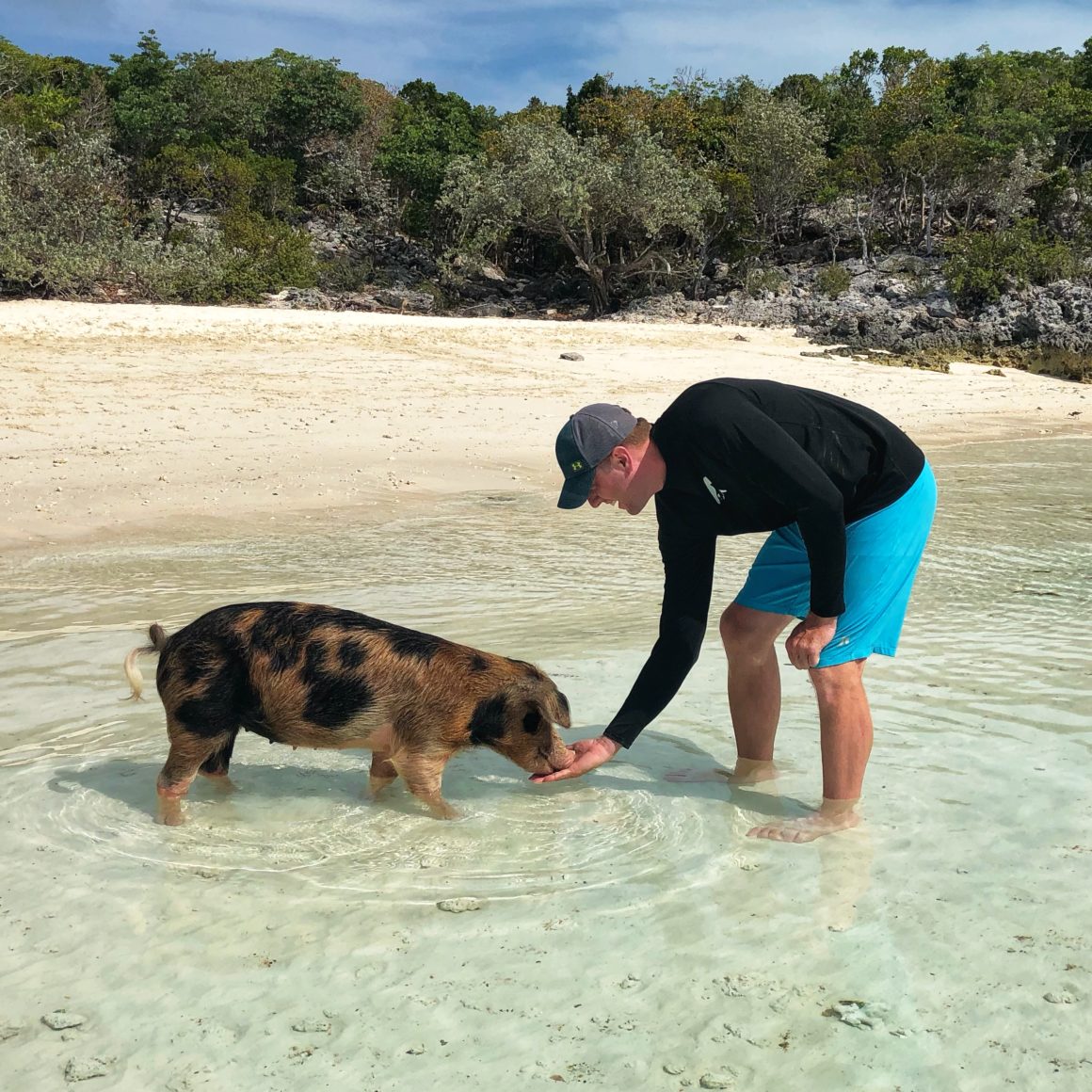
Once we’ve depleted the scavenged carrot supply, we decide to head on our way to Thunderball Grotto while the sun is still out. This short stop to see the pigs was supposed to be our recon mission – getting a feel for the land and what snacks they like. We plan to come back in the morning when hopefully they’ll be bright-eyed and hungry, not stuffed from all the tourists feeding them throughout the day. Maybe we’ll even get to see one swim.
Thunderball Grotto
Talk about good timing – we manage to arrive at the Grotto just before low tide. This is the best time to snorkel the Grotto because it’s easier to enter and exit (without going completely under water), and the current will die down at low tide which is also a slack tide.
Tangent: We really have to pay attention to tides and currents around here. Or rather, we really SHOULD be doing that – we’re not very good at it. There are some things that are better off done at high tide – like traveling through shallow passages. Some things are better done at low tide – like snorkeling caves where entrances may be covered at higher tides. Many things are best done at slack tide. As a simple rule of thumb, slack tide occurs at both high tide and low tide – the moment where water was previously flowing in one direction (e.g. water was coming in) and it hits the point (e.g. high tide) where it now needs to start switching direction (e.g. water starts going out as the tide lowers). At this point of slack tide, the current slows down and actually comes to a stop before switching directions. According to Google there are a lot of other factors that go into determining when slack tide occurs, but we don’t worry about those.
Thunderball Grotto is a popular place, especially at this time of day. We drop the anchor on our dinghy in about 10 feet of water along with numerous other small boats. We gear up and head into the water. A short distance off, we spot a nurse shark. This is a bit less impressive after our encounter earlier today, but still exciting. After some quick video, we swim towards the crowd of people at the Grotto opening. I head in first so that I can get a video of Matt swimming in. The first thing I notice is that it is definitely not slack tide. There is a pretty strong current wrapping around the opening trying to stop me from going in. I’m glad I’m wearing my fins as they allow me to push past it fairly easily.
As Matt enters, I see that same current take him by surprise as well – glad it wasn’t just me. Once inside, it looks pretty similar to the Rocky Dundas Caves we explored recently, but a good amount larger. I guess I should look up what makes a “grotto” versus a “cave.” There are several nooks and crannies to explore, so we head off in the direction with no people. We spot a fair amount of fish, including a lion fish.
Tangent: Lion fish are an invasive species to the Caribbean. They have poisonous spikes that flair out around them – quite pretty actually in shades of red, making them extremely recognizable. Even in most nature reserves, hunting and killing lion fish is allowed because they are invasive and causing damage to the Caribbean reef ecosystem. We’ve heard that they are quite tasty to eat if you know how to cook them, which helps drive people hunting for them.
We notice that the people have started to thin out, so we head back into the main area of the Grotto. This area has tons of aquarium fish and we notice lots of swim throughs under water. It’s pretty cool, but after a several minutes we feel we’ve seen it all, so we exit out the other side of the Grotto to snorkel the reef on that side. It’s a really nice little reef, but the current is quite strong again. Rather than fight it, we stop kicking and let it just push us along the reef for a very enjoyable drift snorkel.
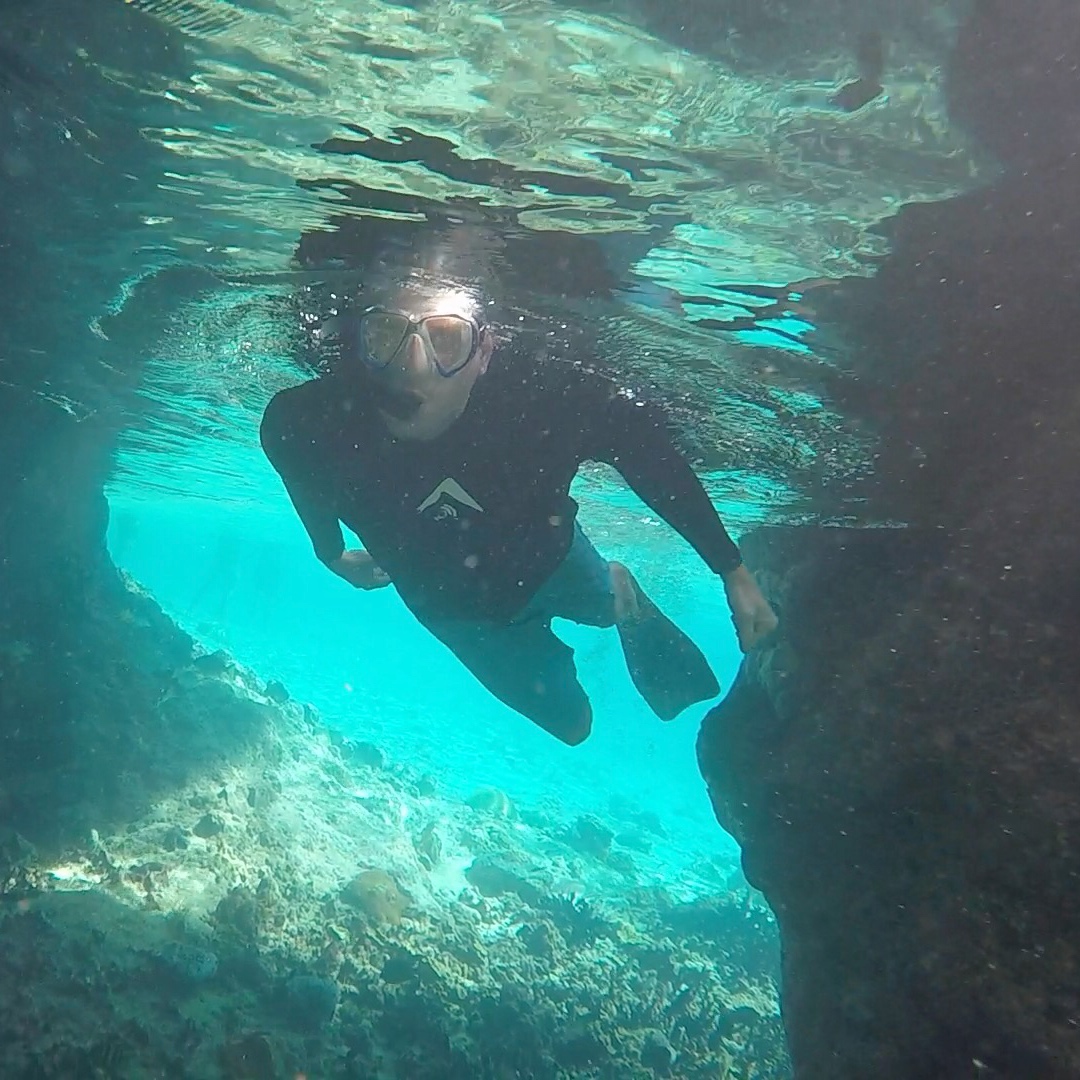
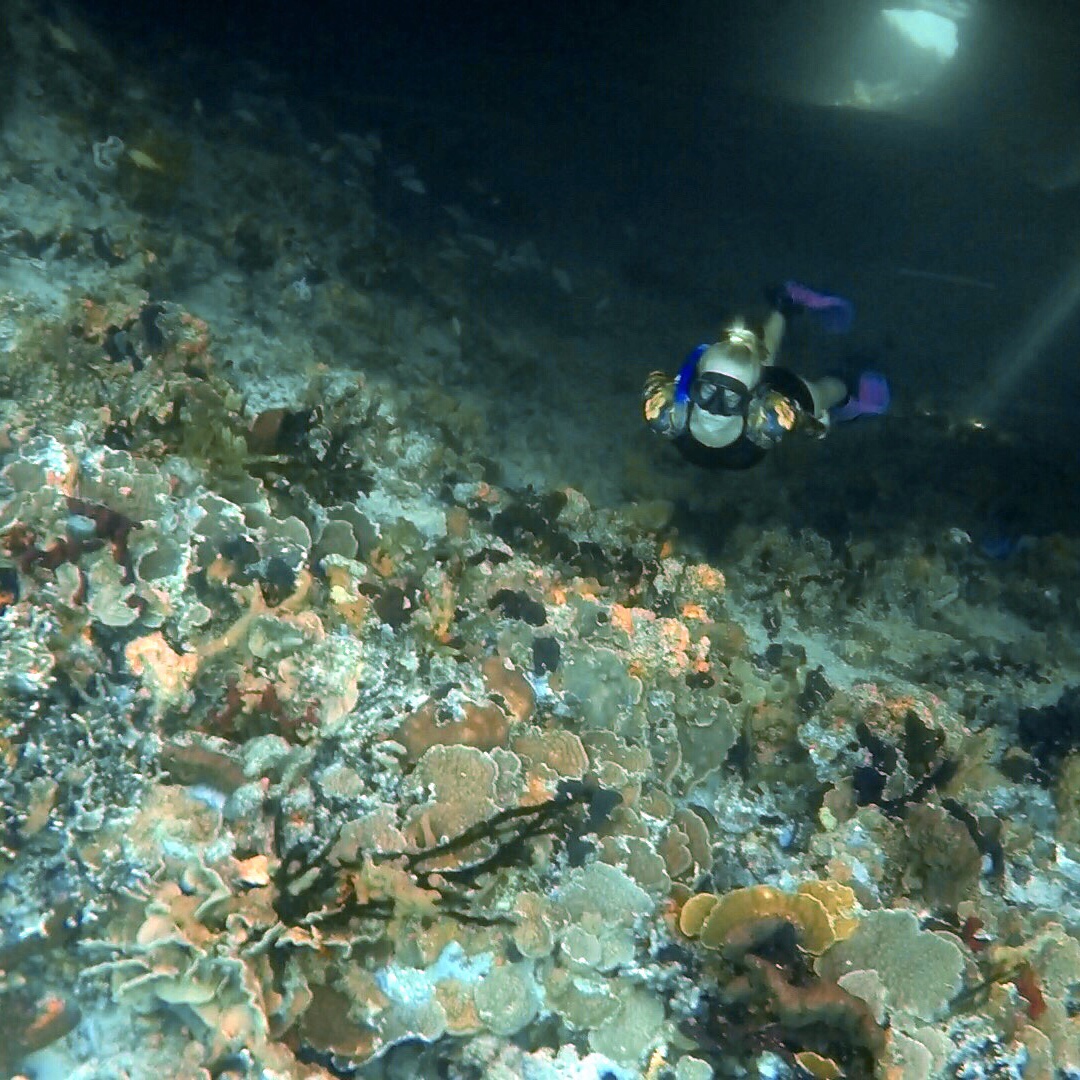
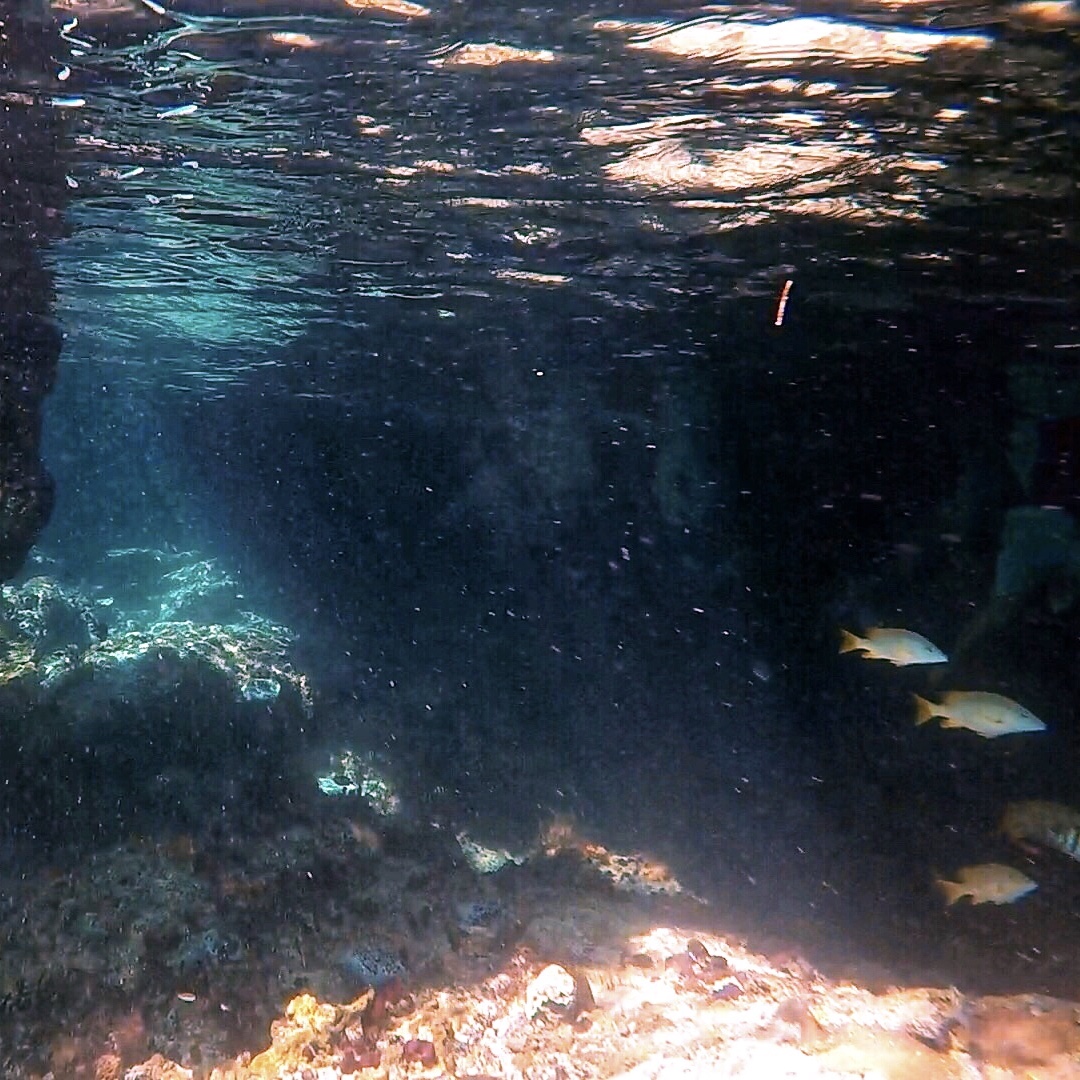
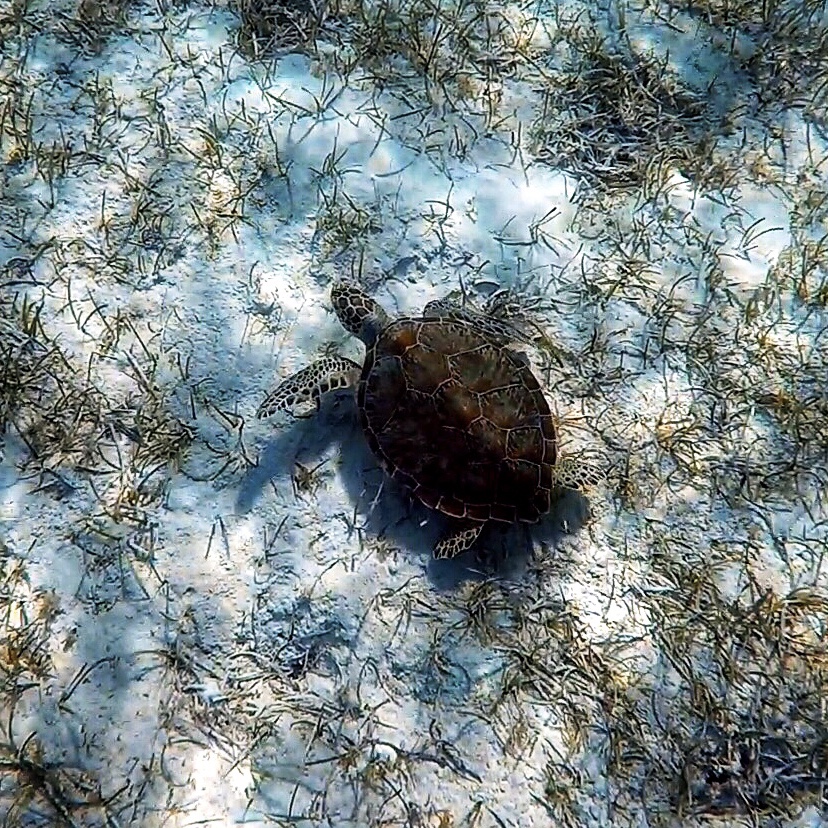
Once the reef runs out, we head in the direction of our anchored dinghy. On our way, we spot the cutest turtle hanging out, eating turtle grass. Often turtles (especially the smaller ones) are skittish and will swim away if you get very close. This one doesn’t seem to mind us at all, though. We must spend 10 minutes admiring the little guy. Our GoPro is dead, but Matt is able to get a couple more seconds out of it! Not to be outdone – another cute turtle swims up to us and begins showing off, pulling up turtle grass and chomping away at it. Watching turtles never gets old.
We eventually leave our turtle friends to their dinner and head back to cook our own. A beach walk with Monster and a pretty sunset complete our epic day of swimming with sharks, feeding pigs, and snorkeling the Thunderball Grotto. Check out the below video to see more of our time at the Grotto.
Unfortunately, we don’t make it back to feed the pigs in the morning before the hordes of tour boats start showing up. I feel bad breaking my promise to bring more snacks to the pigs, but they’ll just have to wait until next time. We plan to pass back through in a couple weeks when my parents visit us, and we will feed them something better than leftover, soggy carrots.