
Rock Sound is a large bay (and town) on the western side of Eleuthera Island. It is a popular anchorage (actually a few different anchorages) for boats traveling by. We stop here for a couple nights and become very acquainted with the many critters that occupy the air and water – some were pleasant, others not so much.
A long, rough passage
We travel for about 60 miles from Current Cut to Rock Sound Bay. It is a very, very long 60 miles with rough, choppy seas. There are short bursts of swells that travel in groups of 3-4 waves close together, and every time we hit one of those sets, water would inevitably come flying up over the front bow. A lot of water. A few times, the water comes up over the bow and down through the open hatches in the salon. That is a very long distance for water to splash.
The bilges fill up as does the front bow compartment where our water maker is. I’m not really sure where the water comes from to get into the bilges nor how most of the water managed to later escape the front bow compartment. I probably don’t want to know. We just say that it’s normal (it probably is) as we can’t even entertain the idea of a leak somewhere on-board.
Somehow Matt manages to stay productive at work the entire time we’re bouncing around on the seas like a ping pong ball. I man the helm with some assistance from Monster, trying to keep my focus on the horizon. We are able to get both sails up for a stretch of the journey, although we also keep on one of the engines to help with our speed. We get up to over 9 knots at a couple points – that’s fast! Towards the end, we have to motor the last couple hours dead into the wind and only make about 5 knots. We are definitely happy to arrive shortly before sunset and see that the bay is nice and calm.
Bugs, bugs, bugs
There are a few other boats in the south area of the bay where we plan to drop anchor, but there is tons of room. In fact, we find it odd that the other boats are anchored so far from shore. This should have been our first clue.
We head in closer to shore though (quicker access to land and more wind protection) and drop our hook a couple hundred feet in front of a small blue hole. We will definitely be checking that out later! The anchor never seems to set very well, and we begin to think we’re anchoring on rock. There is a blue hole nearby after all, which isn’t just randomly dipping down 25 feet into a sandy bottom. We put the engines in reverse at full power though and don’t seem to move, so we decide to just set the anchor alarm and see how it goes. If we do drag, we have a long ways to go before we would be near another boat or land. The wind is also forecast to be pretty light.
Tangent: When setting the anchor, it is imperative to confirm if you have a good set/hold on it. Otherwise you might wake up in the mangroves with your keels stuck in sand the next morning (speaking from experience!). In a prior post, I talked about how once we arrived in the clear waters of the Bahamas that we dive our anchor to make sure it’s set. This is still probably the best approach, but we have developed other ways of determining if we are set that are decent alternatives. One: is the chain shaking? If we are pulled taut against the anchor and the chain (the portion out of water coming up to the windlass) is shaking, then we are almost certainly dragging. Two: relative location to at least two reference points. I’m terrible at this one, but Matt will choose a couple distinct reference points and closely watch how our position moves relative to those points (e.g. we shouldn’t move). Three: are we into the wind?. This one isn’t foolproof since there can be impacts of currents and tides, but generally if our anchor is set then we should always move to face into the wind. When we are first getting it set, we might arc back and forth passing through the wind a few times, but it should get to be a shorter and shorter arc such that we stay into the wind. We perform these three checks first while just letting the wind push us and then with the engines in reverse at 2200 RPM. We also always set an anchor alarm now on my phone so that we do start to drag anchor, we can catch it early and correct course without issue. Knock on wood, we have only dragged anchor over night the one time.
Feeling good enough about our anchor for the night, we grab a sun downer (what boat people call a drink) and enjoy a nice sunset.

At the conclusion of the sunset is when all the bugs come to visit. This isn’t completely surprising as it’s always at dusk that bugs seem to be the worse. We generally haven’t had many bugs here in the Bahamian islands, though. These bugs more than make up for the prior lack of. At first it is just a dozen or so. We see that a few have made it inside, so we turn off the inside lights and put on the outside lights to draw them out – works like a charm. They are very tiny bugs, which can definitely just come through our screens. We decide it’s best to put a single light outside so that any bugs will at least stay outside. Big, big mistake.
We place an inflatable, solar lantern (yep pretty cool!) outside on our cockpit table. There’s several small bugs surrounding it, but we figure they will just fly off in the morning or when the light dies. Right before bed we look out and there are a lot more bugs than before. Yikes! They’re all on the table, surrounding the light, so it seems okay enough. It’s not.
Upon waking up in the morning, I go to look outside and almost have a heart attack. There are hundreds – nope thousands – of these tiny bugs all over the cockpit. Not just on the table, but on the coolers, the cushions, the walls, the steering wheel, the floor – everywhere. I can’t even step outside. And for better or worse, they are all dead! They definitely won’t be just flying away, and they’re so small, no amount of wind is going to blow them off. They are stuck.
Some dark clouds are forming in the distance, so we decide the rain is our best chance. It comes through shortly after, pours very hard (fortunately!), and so I grab our cleaning brush/mop thing, a bucket and head outside in my swim suit to get to work. It is a very unpleasant job. Very unpleasant. After about half an hour, though, I think I’ve managed to get the large majority of bugs washed off the boat. Did I mention that I just did a big cleaning of the outside of our boat the day before this? Unbelievable.
Snorkeling the three rocks
Once the rain dies down and Matt is done working for the day, we load up the dinghy and set out to do some exploring. First up is to find a beach for little Monster. It is not a very nice beach, but it will have to do. We need to walk the dinghy up the last few hundred feet because of how shallow the water is. Our feet keep sinking into shallow areas of something that feels a lot like quicksand. Kind of gross. I’m glad when we are all back in the dinghy and motoring away.
Next we head into a small mangrove lined creek, which reminds us of exploring Turtle Creek on Chub Cay. Thinking it might be a good place to spot turtles and baby sharks, we slow down and begin to paddle. In a short time we are awarded with a baby shark and a barracuda! We also spot several turtles popping their heads up in the distance as we slowly move throughout the area. Unfortunately, we don’t get any good photos, though not from lack of trying.
After we have our fill of turtle watching, it’s time to head towards our real target destination – three rocks sticking up out of the water nearby. These remind us of The Indians in the BVIs or The Victories in Bimini, both of which had great snorkeling. We’re feeling optimistic.
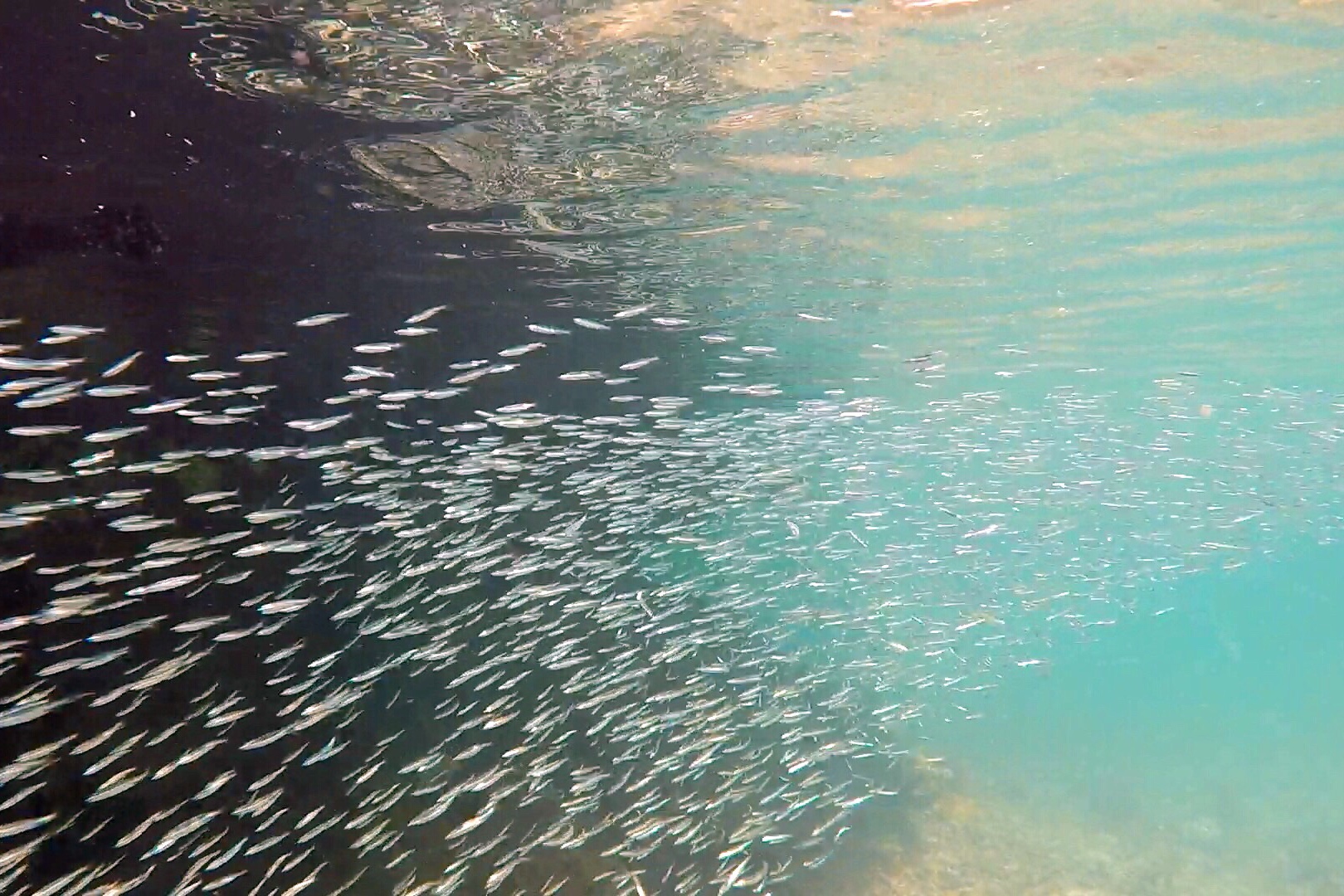
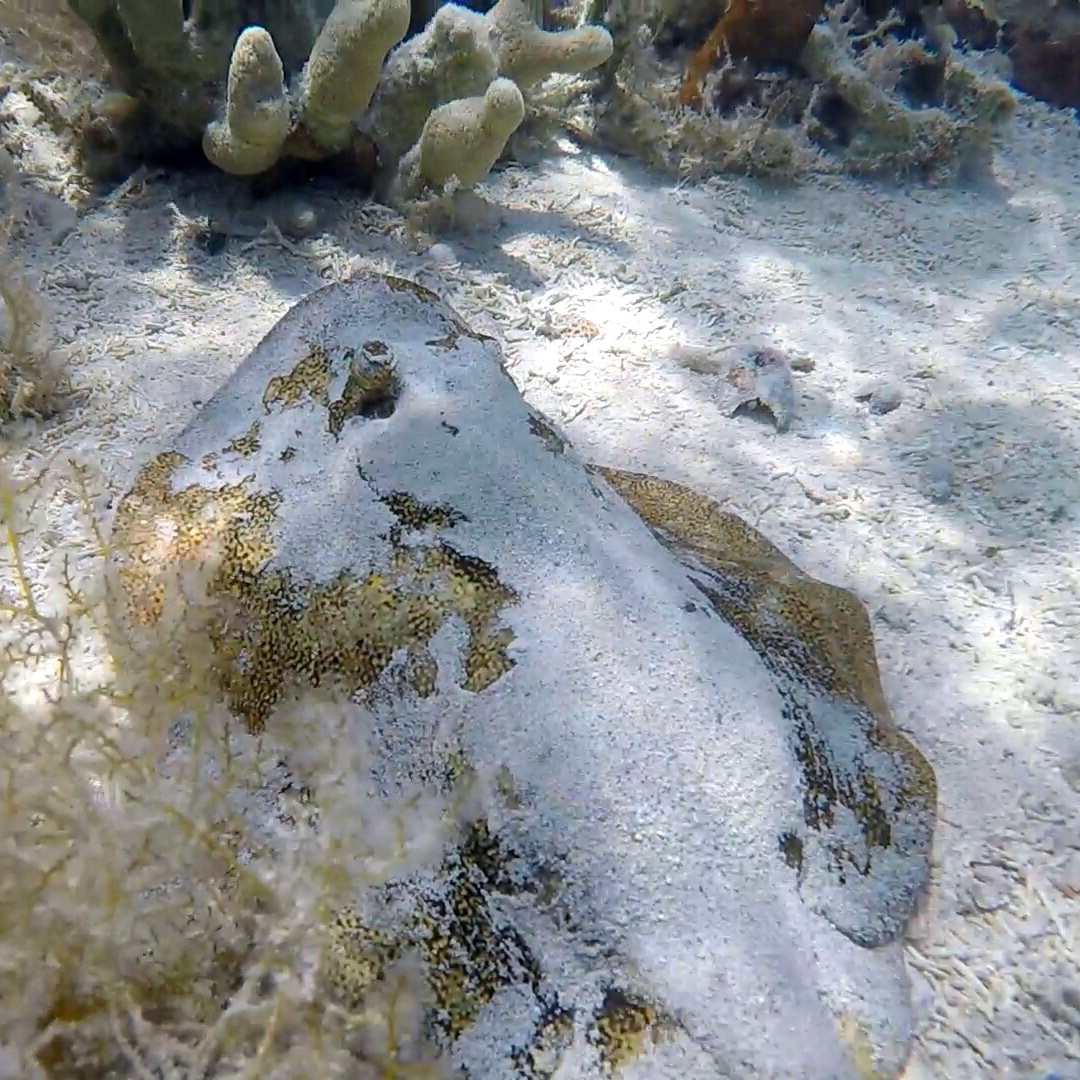
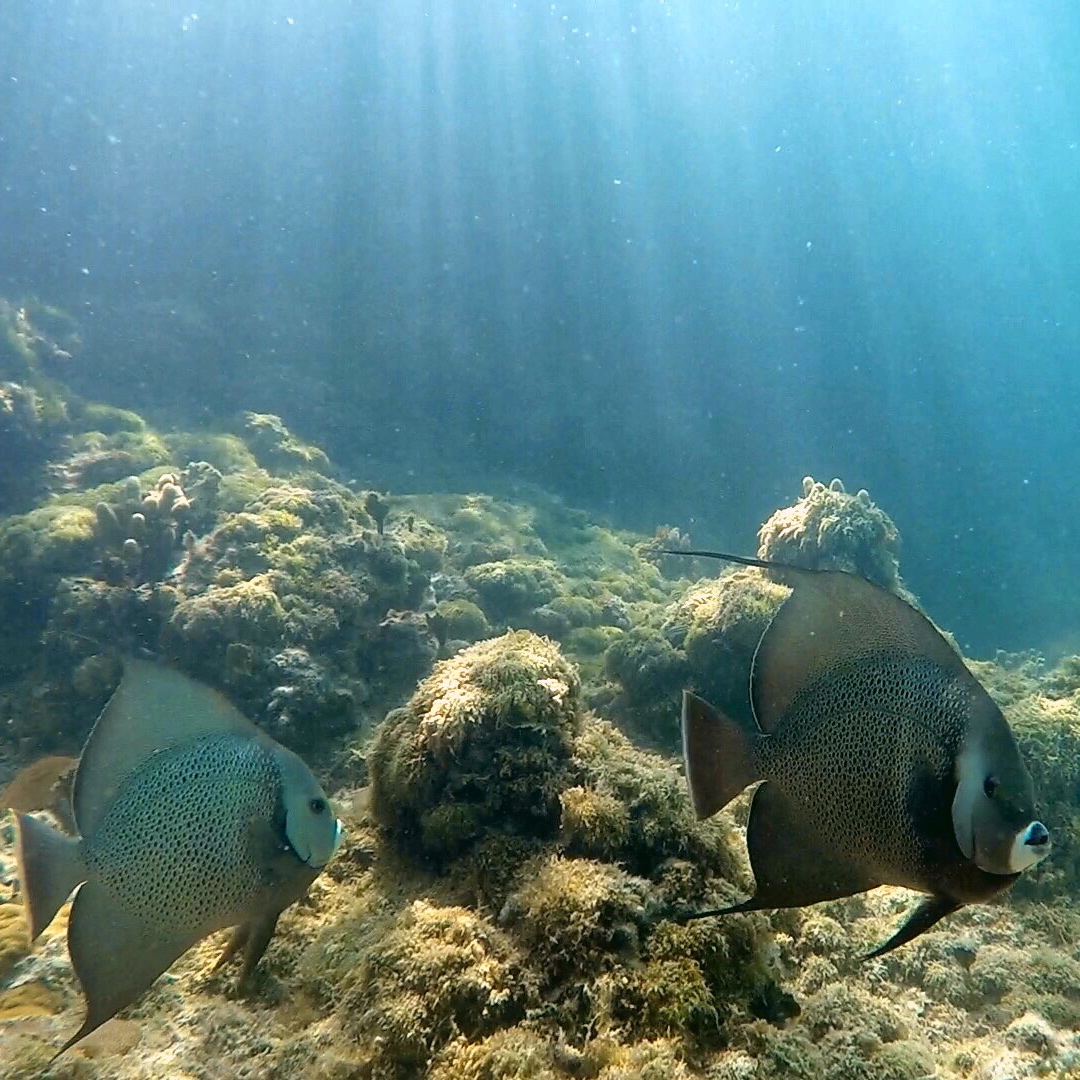
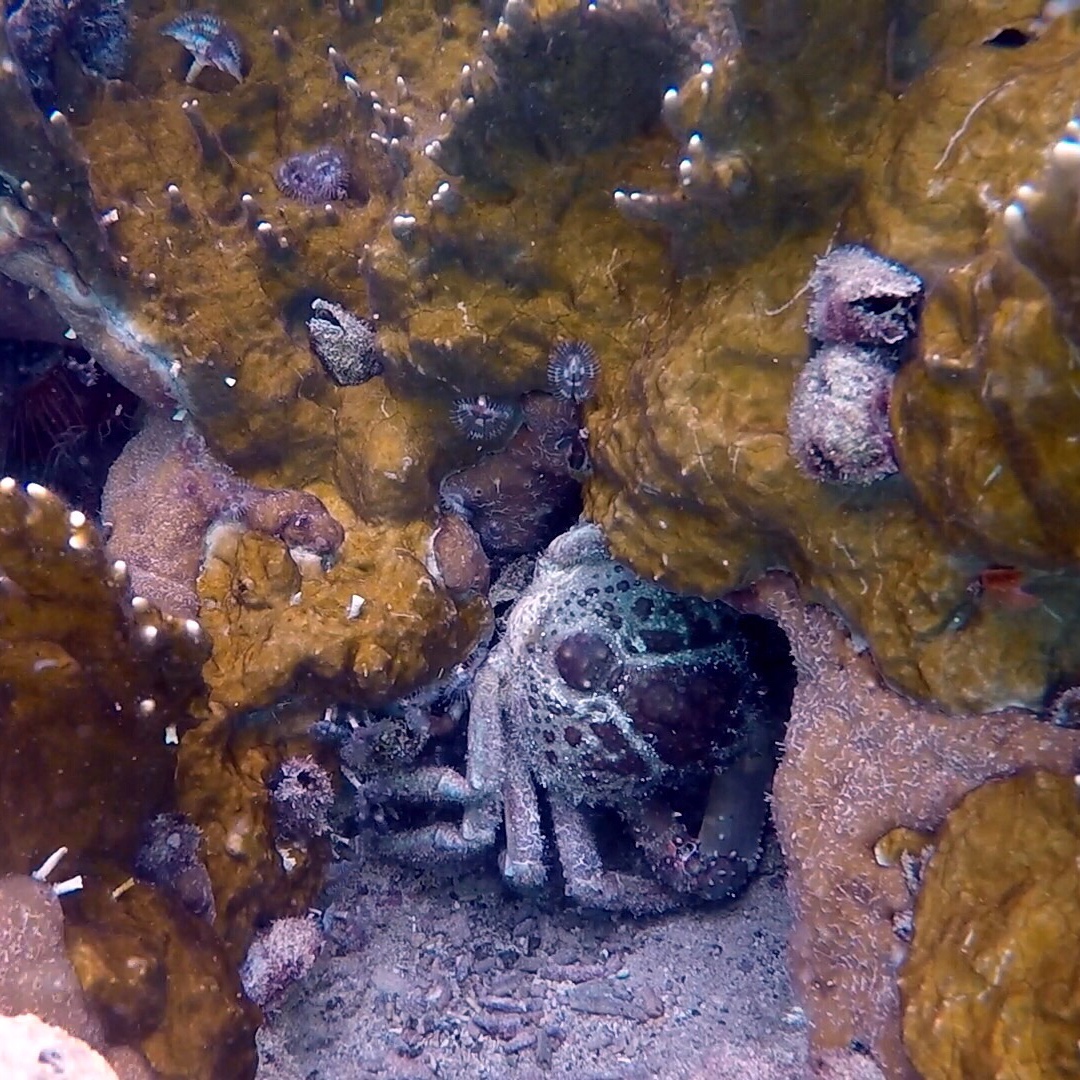
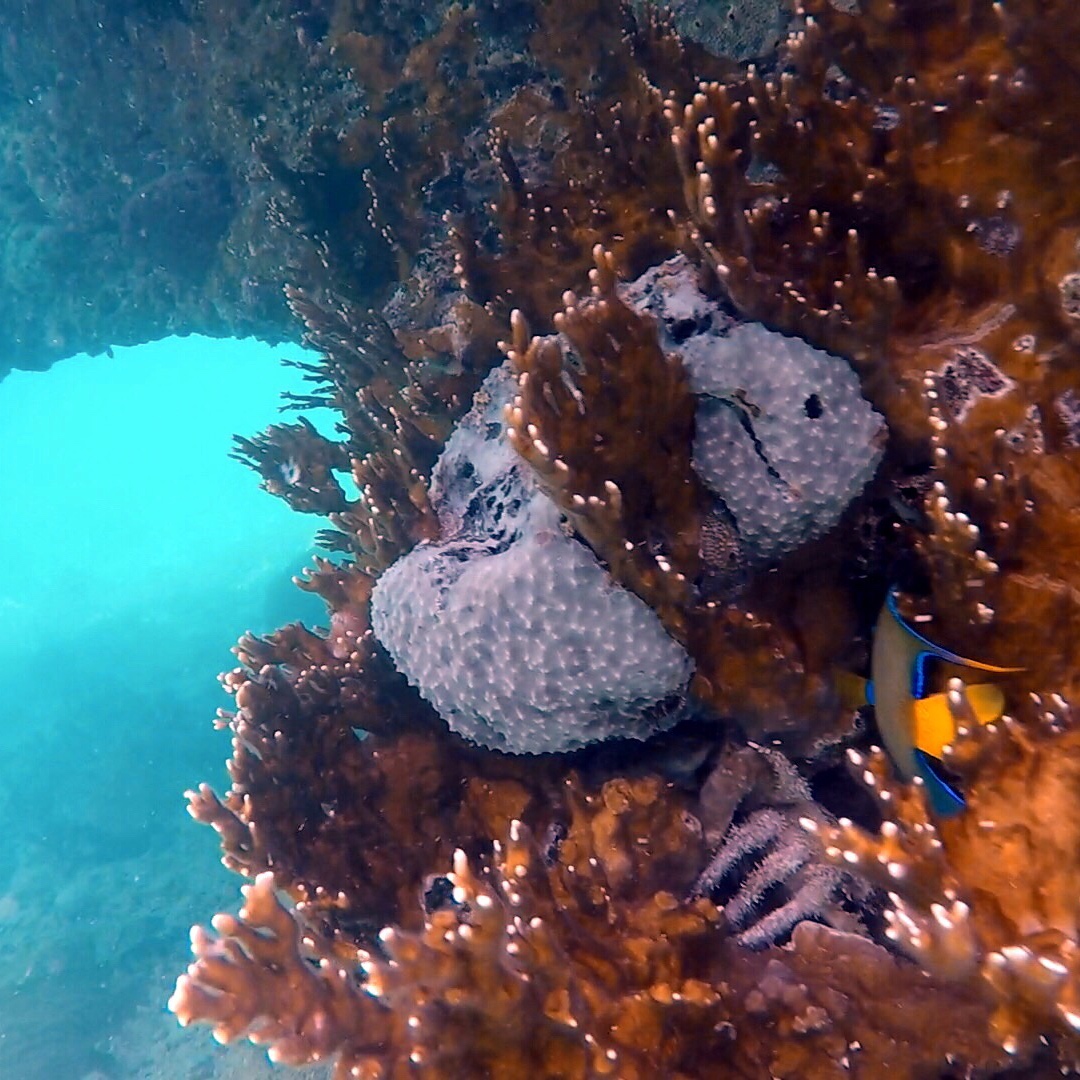
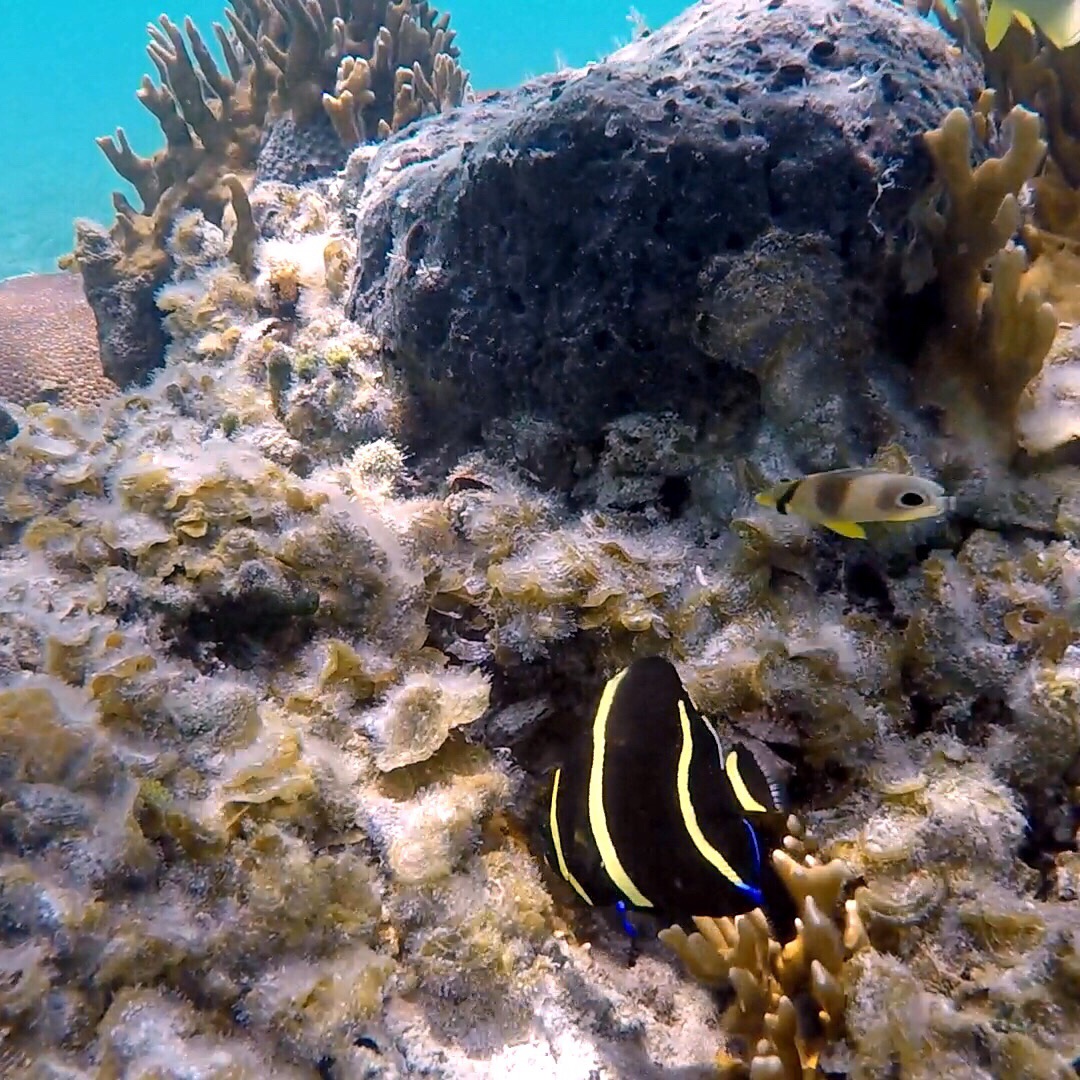
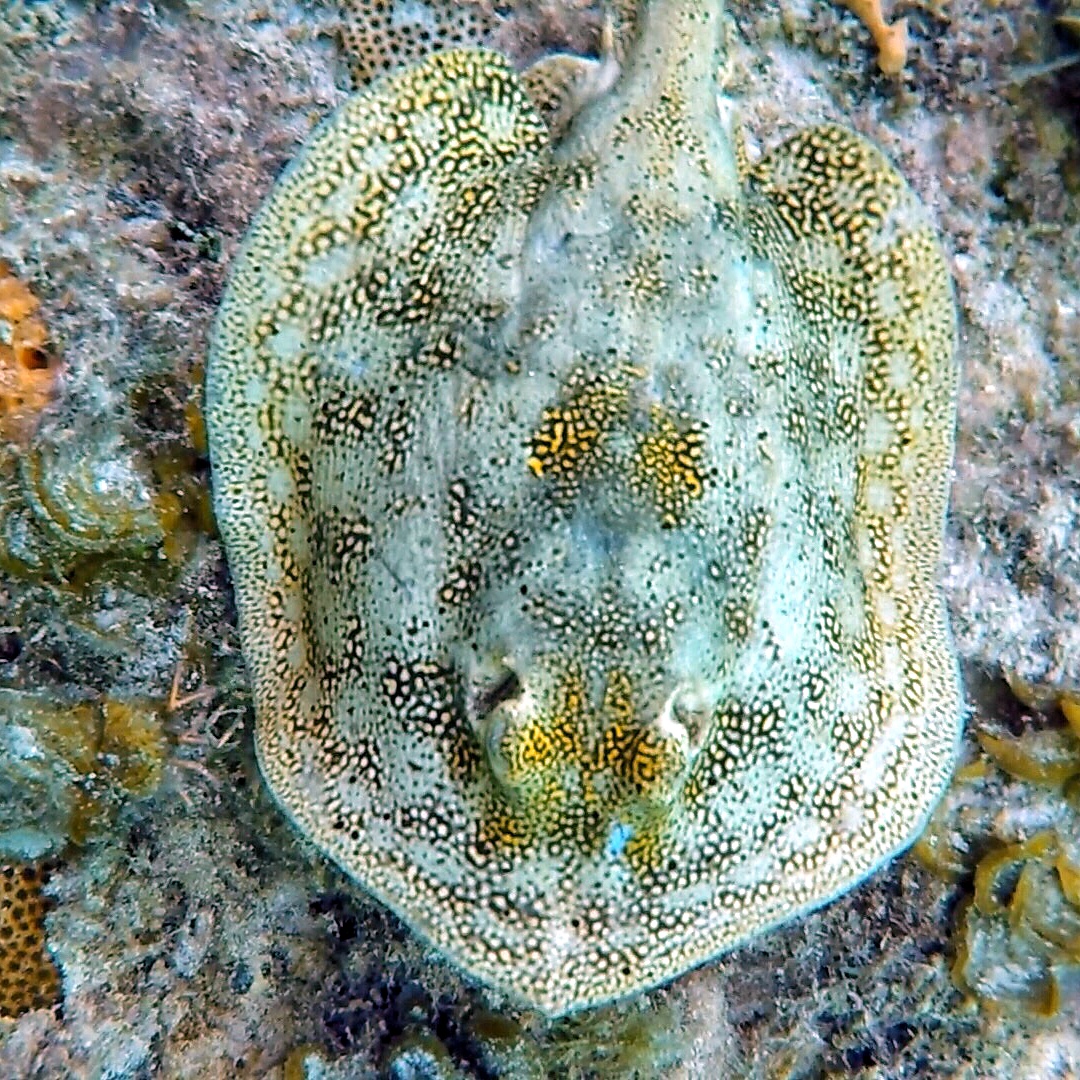
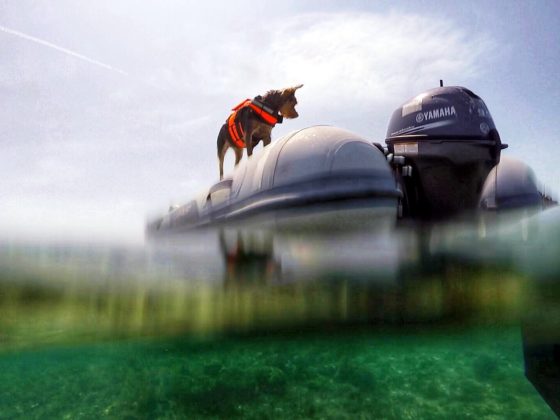
We were right – pretty nice snorkeling! We hop in the water and swim around pulling the dinghy (and Monster) behind us. Check out the most recent Monster Mondays post for Monster’s account of trying out snorkeling 😉 Here are some of the cool sea critters that we spot while snorkeling.
Snorkeling the blue hole
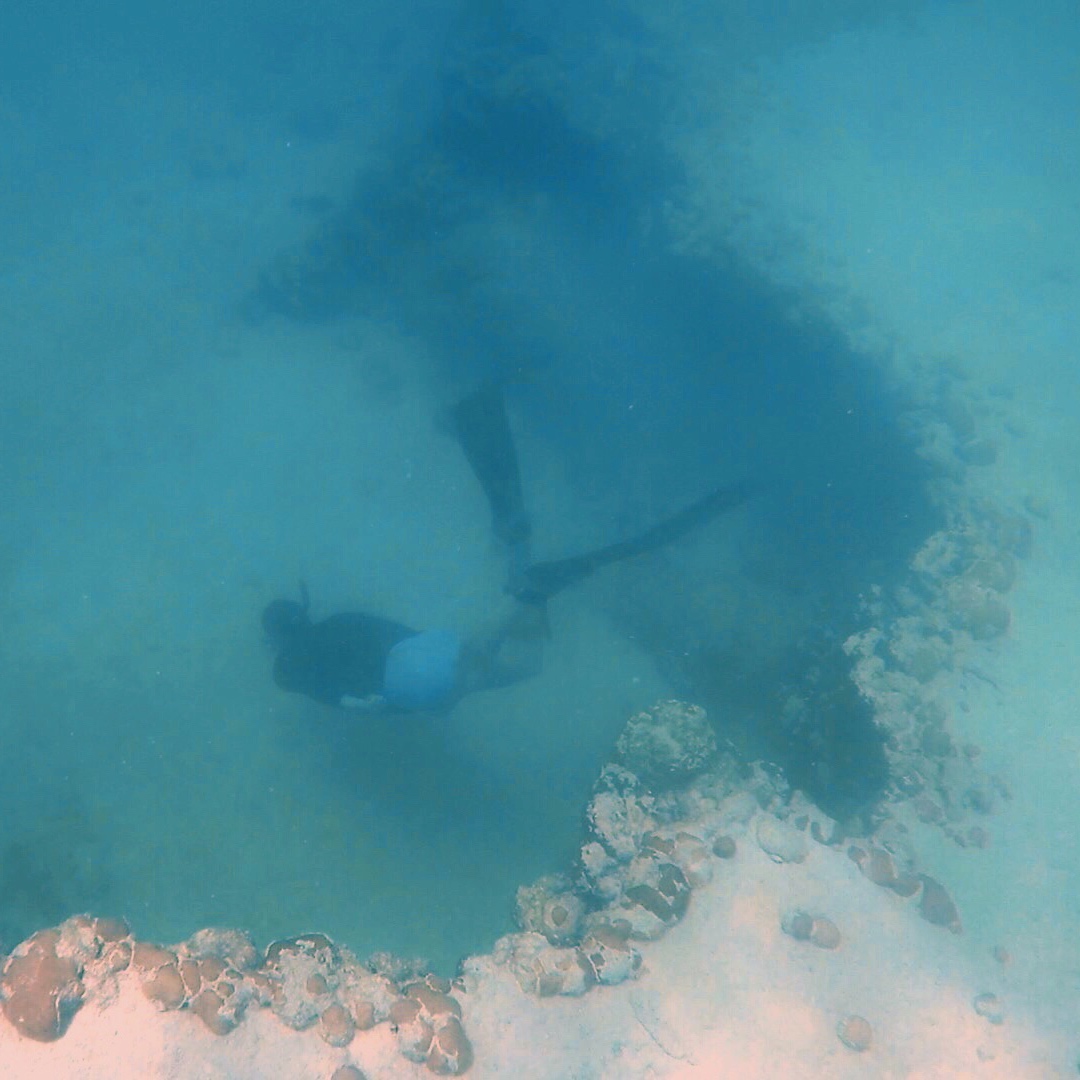
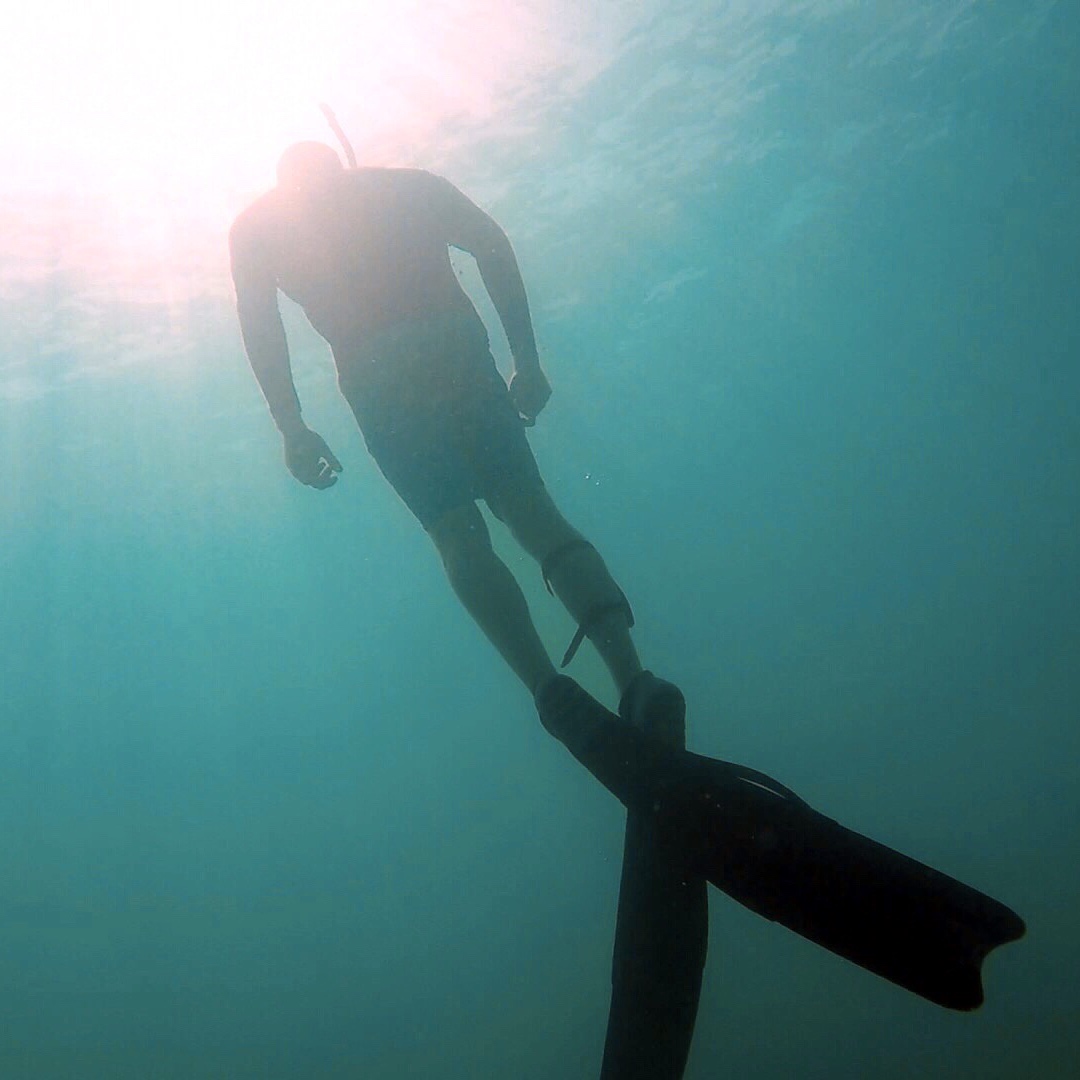
You may recall that we visited the blue hole on Hoffman’s Cay back in the Berry Islands, which was located in the limestone on land (water came in somewhere underground). This blue hole is quite different, as it is completely located in the ocean, beginning at about 10 feet deep. You can see where the floor (limestone I assume?) has a sharp drop off from 10 feet down to about 30 feet in a circular shape – forming the blue hole. It isn’t that large, but still a pretty neat natural phenomenon.
We take turns diving down a few times to have a look around and grab a few photos. There isn’t a ton of life in the blue hole except for some fish, including a few quite large ones. I start getting a bit chilly from all the snorkeling, Monster is crying at us from the dinghy, and the GoPro dies – seems like it is time to get back to our boat.
More bugs
Not wanting to deal with the bug massacre again, we decide to move over towards another anchorage in front of the small town. There were several boats there last night and again tonight, so seems like the bugs must not be an issue. We anchor at the back of the pack (furthest from land) just to be safe though.
It’s close to sunset again and we decide to try heading into town to eat dinner at one of the water front restaurants – there are supposed to be two almost next door. We cannot for the life of us find the second one – the one we want to eat at. We pull our dinghy up to the only restaurant dock we find and confirm the menu here isn’t quite for us. If there isn’t a single burger or sandwich on the menu, it’s probably too fancy for my blood. We begin to walk down the street to see if there’s anything else around or if we somehow missed our targeted restaurant. We find nothing. Nothing except tons of mosquitoes that are eating us for dinner. We turn around, walk back to our dinghy, and motor back to our boat. We cook pasta instead.
As the evening continues on, we begin seeing more and more bugs again. This time, we don’t have any lights on outside and very few inside. We turn on our generator and the AC so that we can have all windows closed. The bugs just keep coming. Nothing like the night before, but bugs of all sizes are flying and sitting around our cockpit. I begrudgingly head to bed dreading what we will wake up to find in the morning.
It was pretty bad. If the prior night was a bug massacre, then this was a small bug battle field. Not nearly as bad, but still gross. This time we just use cleaning product and paper towels to wipe up the dead bugs and encourage some of the larger, still living ones to fly away while they have the chance. We have to get out of here.
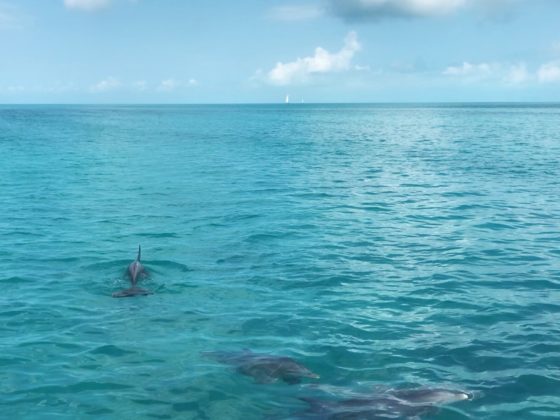
Stay tuned for our next post to hear about one more type of critter we observed in Rock Sound Bay. Don’t worry – it’s a really good one!

1 comment
Just found your posts. Nicely done and good work (and a lot of it😊)
We used the vacuum cleaner and a small brush to sweep up the bugs, then empty it out before storing it away.
You both have a steep learning curve, and you are doing magnificently well. Congratulations, safe voyage and calm seas!