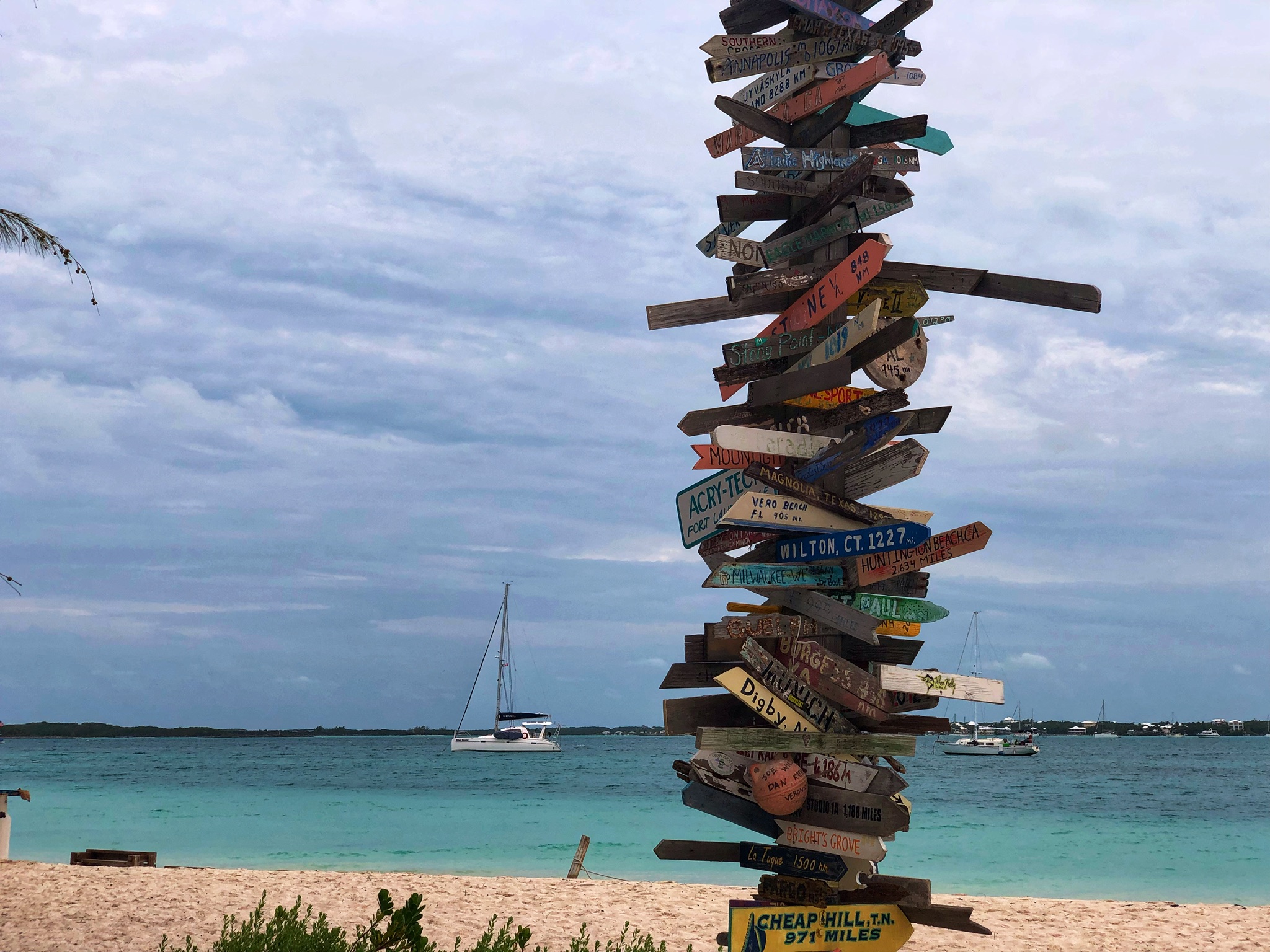
Georgetown is the capital of the Exumas and is located towards the southern end of the island chain. It is a popular cruiser’s destination. We’ve heard it’s a place that is easy to end up spending all of your spring before realizing how much time has passed. One boat we met has even been anchored in the exact same spot for about a year now. We must be missing the charm of Georgetown, because we would rate it as “just okay.” Maybe we’re jaded because our windlass died on us – again.
Goat Cay
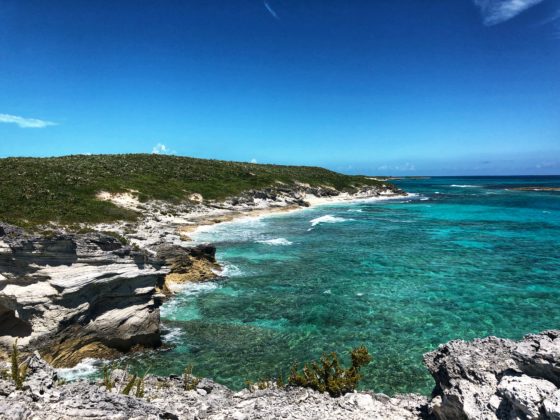
It’s a rough passage on the outside coming into the Georgetown area, and with strong winds forecasted out of the southeast, we search for a well-protected anchorage. We settle on Goat Cay, which is just north of Georgetown a couple miles. Upon pulling into the horseshoe-shaped bay, we quickly see that we are the only boat around. That could be good. Or as we’ve learned from experience – that could mean other boats know something we don’t. It’s a gorgeous beach and the water seems calm, so we go ahead and drop anchor.
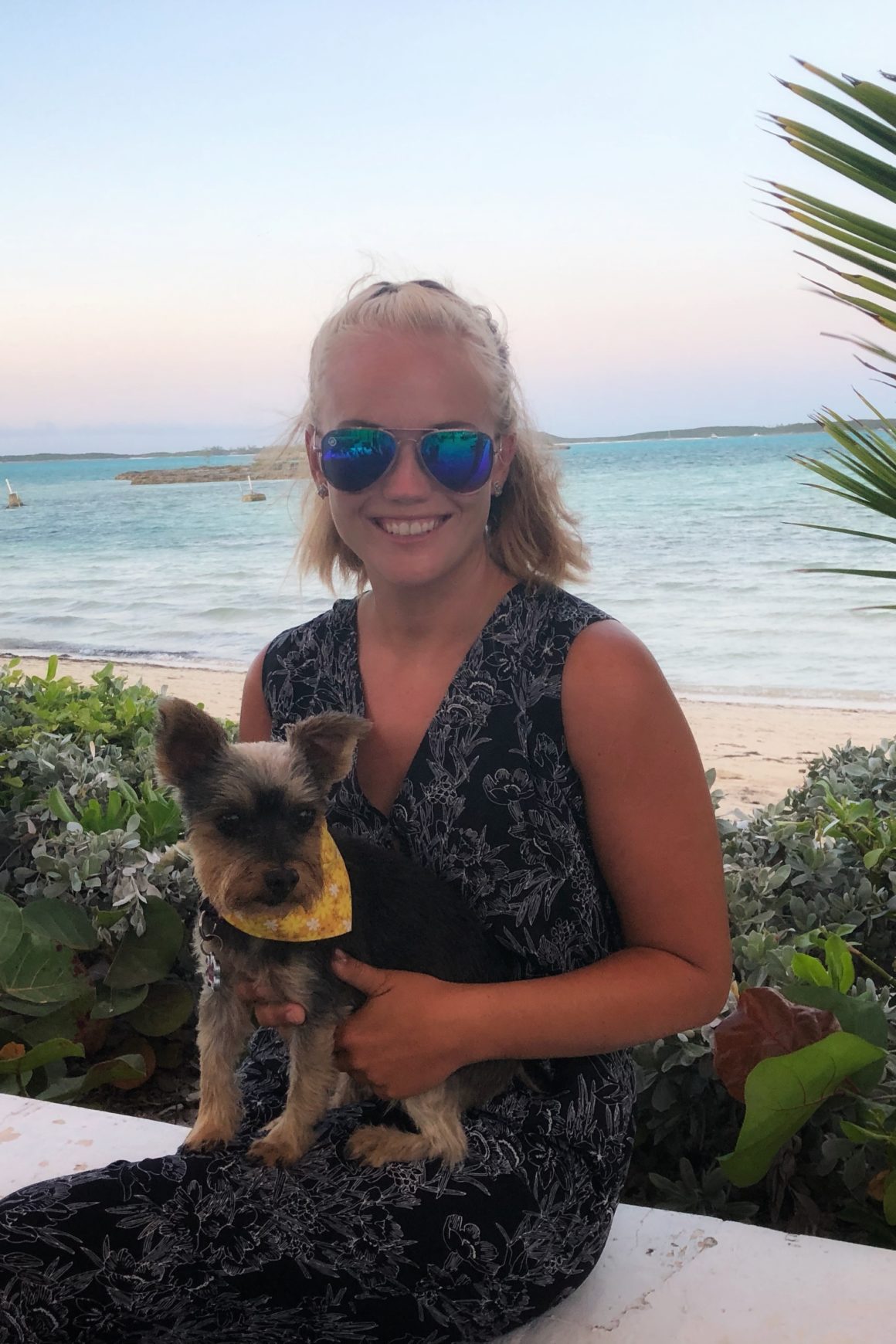
According to Google, there is a beach restaurant in the next bay over that serves pizza. So, dinner is decided. We put on some real clothes (rare!), straighten up Monster’s bandanna, and set off in the dinghy. The water in our bay may be calm, but the water just around the corner is definitely not. After making little progress, we turn around and decide that we will land at our beach and then walk down the main highway (yet another “Queen’s Highway”) to the restaurant. There is supposed to be a small trail getting from the beach to the highway. We manage to miss it and instead exit out someone’s backyard (oops). It’s a short walk to the restaurant, and we arrive to find it empty – like most restaurants we’ve visited in the Bahamas. Since Monster is with us, we have to sit outside – which is completely fine, except for some reason they don’t provide service outside. Matt goes in and orders us a pizza and two Kalik “to-go.”
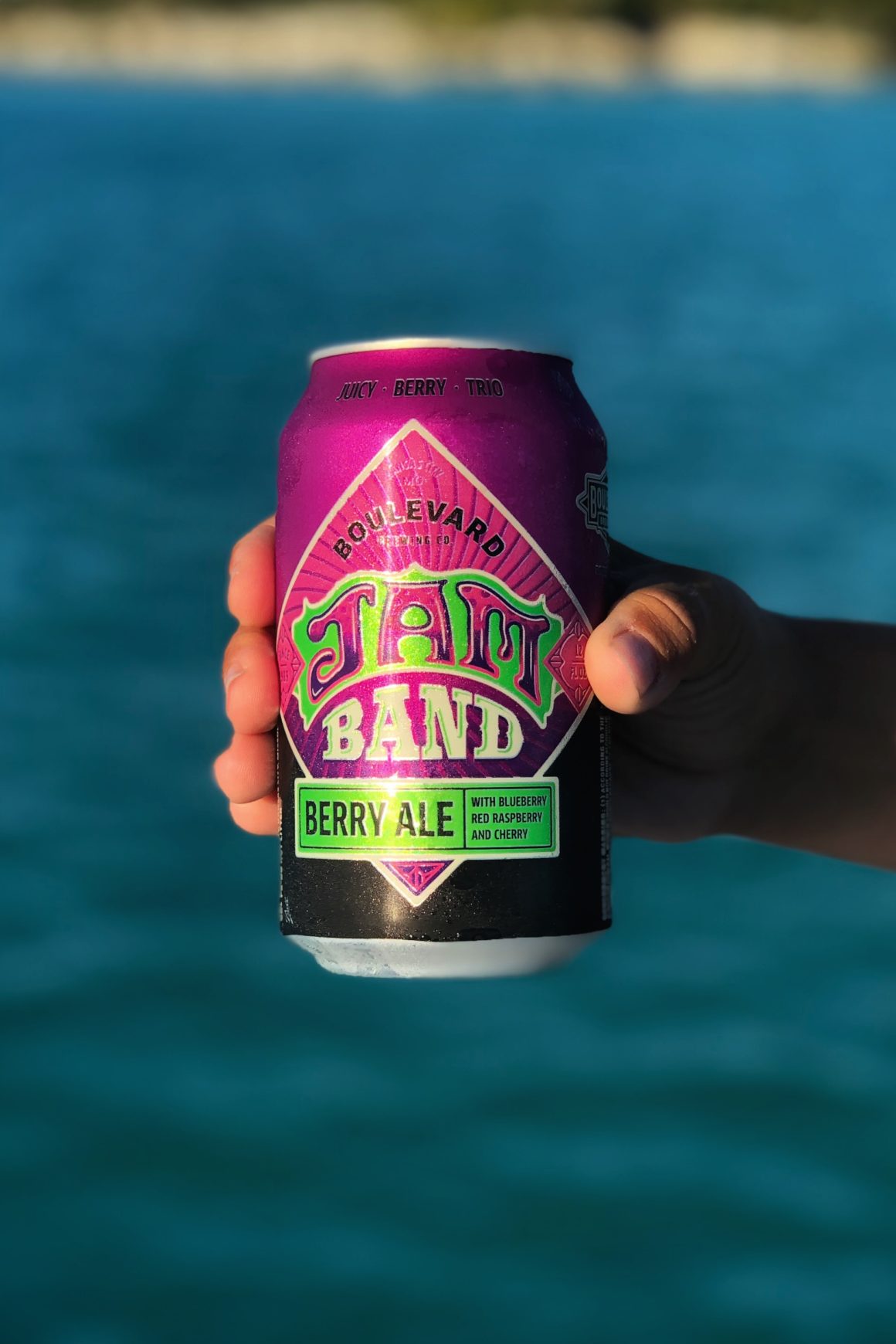
One thing the Bahamas really seems to be missing is good craft beer. Kalik and Sands are fine – the Bud and Coors of the Bahamas, but a good IPA would be a nice change of pace once in a while. Thankfully, we stocked up our boat with lots of craft beer from the US. Tonight, we enjoyed a berry-flavored ale from Boulevard Brewing out of Kansas City, Missouri (near my hometown!) on our way over to the restaurant.
Always searching for reef
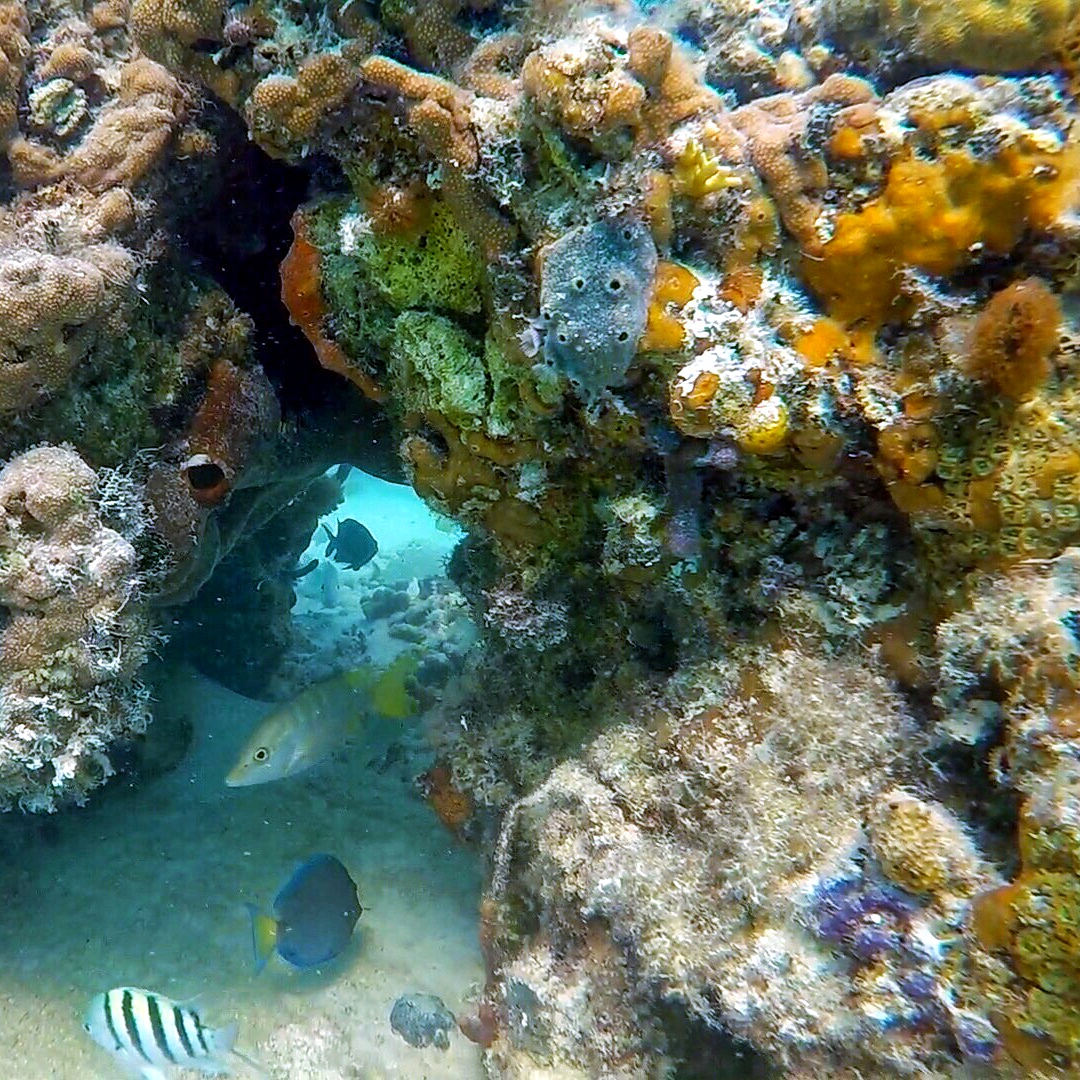
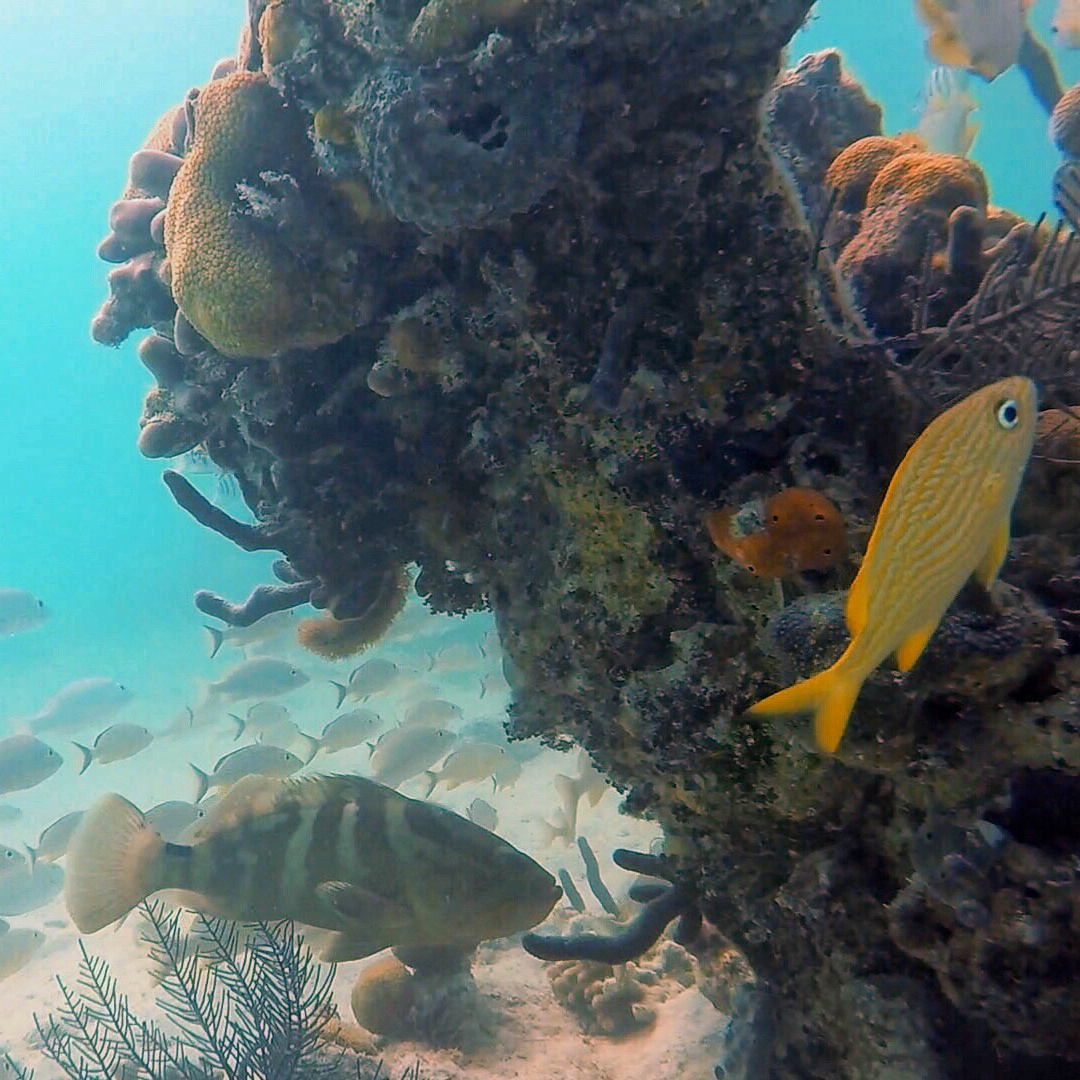
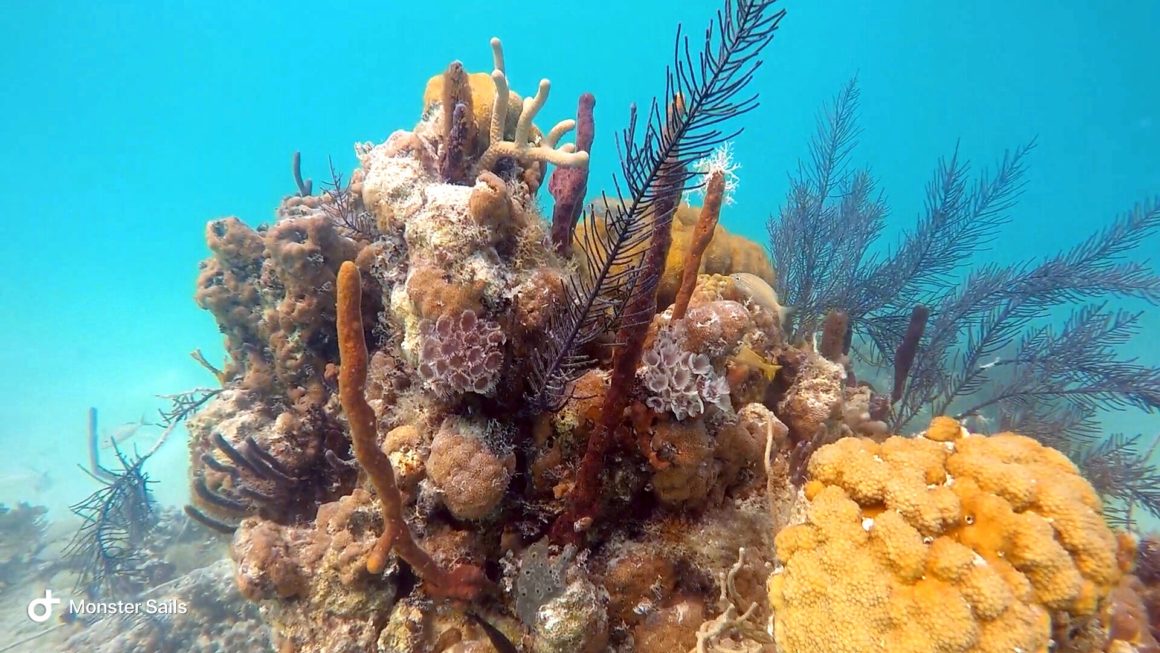
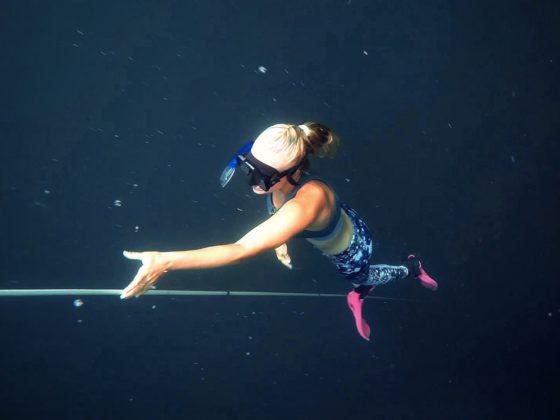
I’m pretty sure we spend more time searching for coral reef than we do enjoying it. That’s really been the biggest disappointment on this whole journey – how difficult it’s been to find good diving (or even snorkeling). Our extensive research has told us that there are a few dive sites around the area, and they *might* have dive moorings. We set off on a large loop around Stocking and surrounding islands to try and find them. The short story is – we found zero.
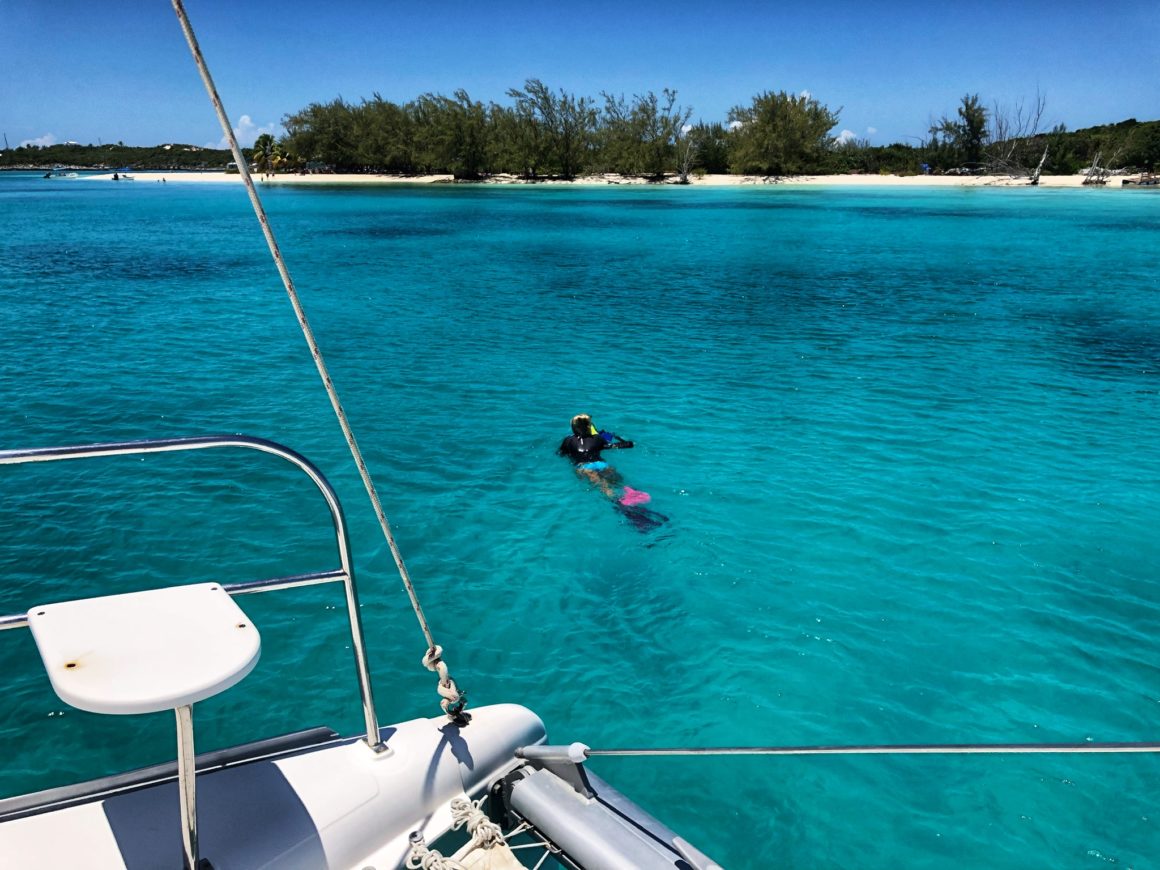
We did find a few snorkel buoys marking some decent areas to snorkel. The wind and waves are pretty rough, though, so we end up just heading towards another anchorage. On a different day, when things are more settled, we return in the dinghy to try snorkeling the Channel Marker Reef and Black Rock coral heads. The Channel Marker Reef is actually quite nice and reasonably large – siting in around 10-15 feet of water. The only bad part was even in settled weather, the visibility is still only sub-par. We swim the entire distance of the reef, passing by three snorkel buoys, with Monster and the dinghy in tow behind. The only way we can enjoy snorkeling with Monster is to drag her in the dinghy very close to us. We spot a turtle, large barracuda, and the usual fish suspects.
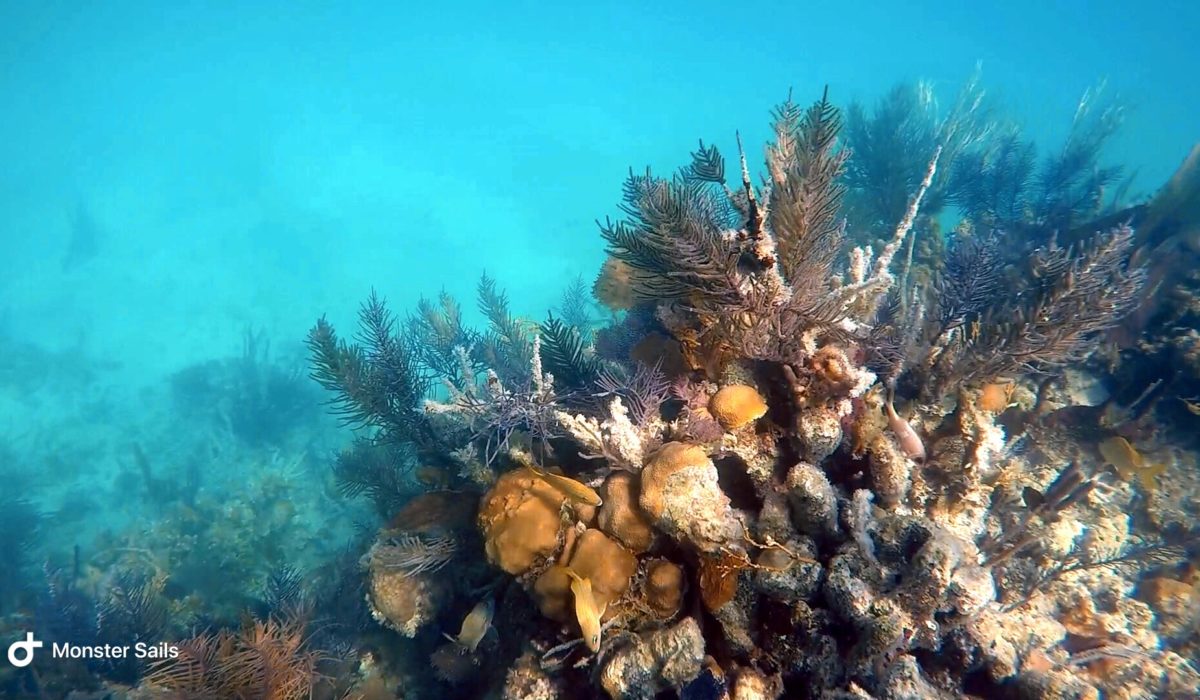
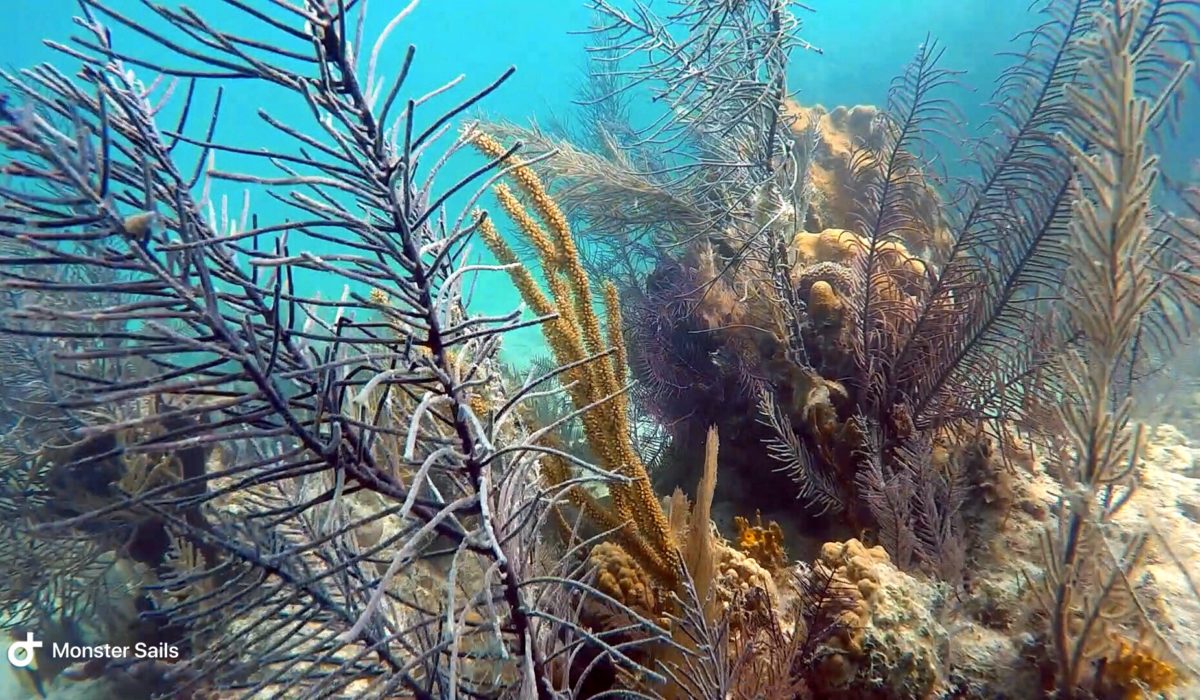
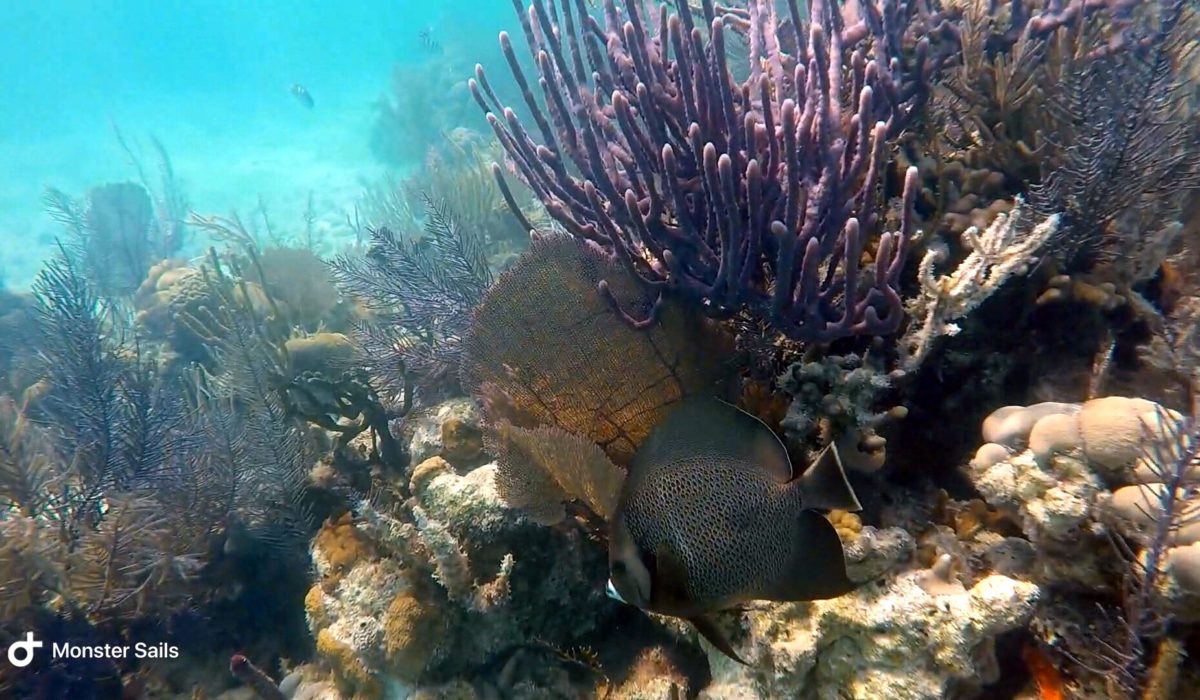
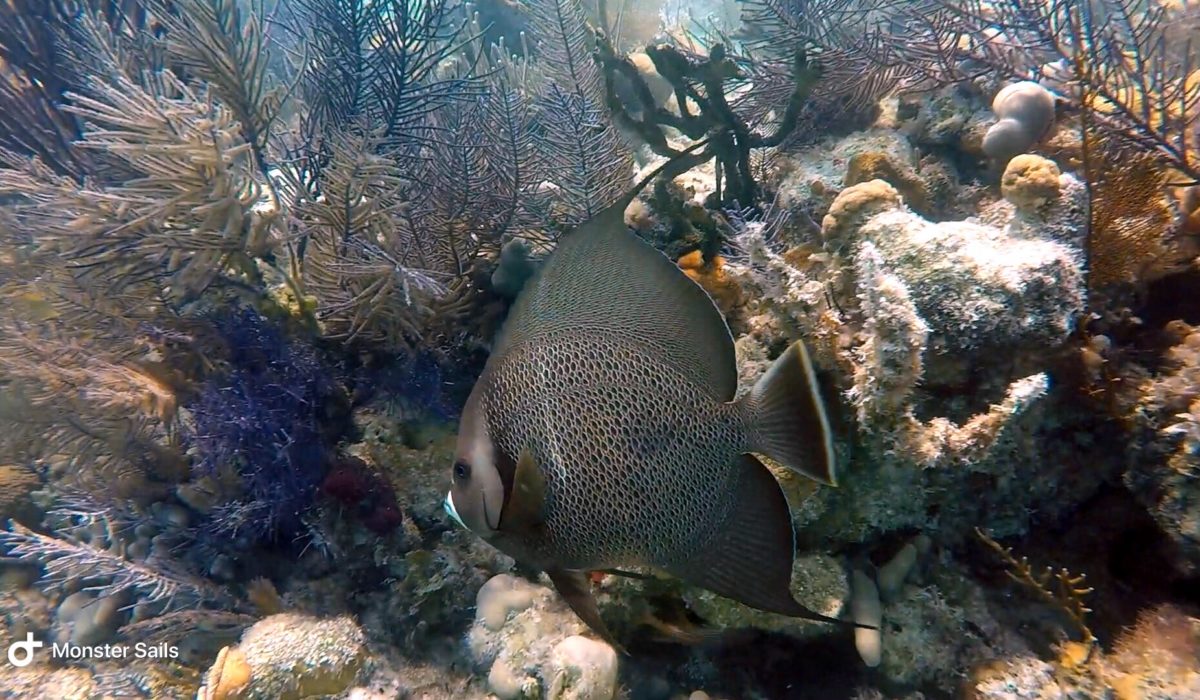
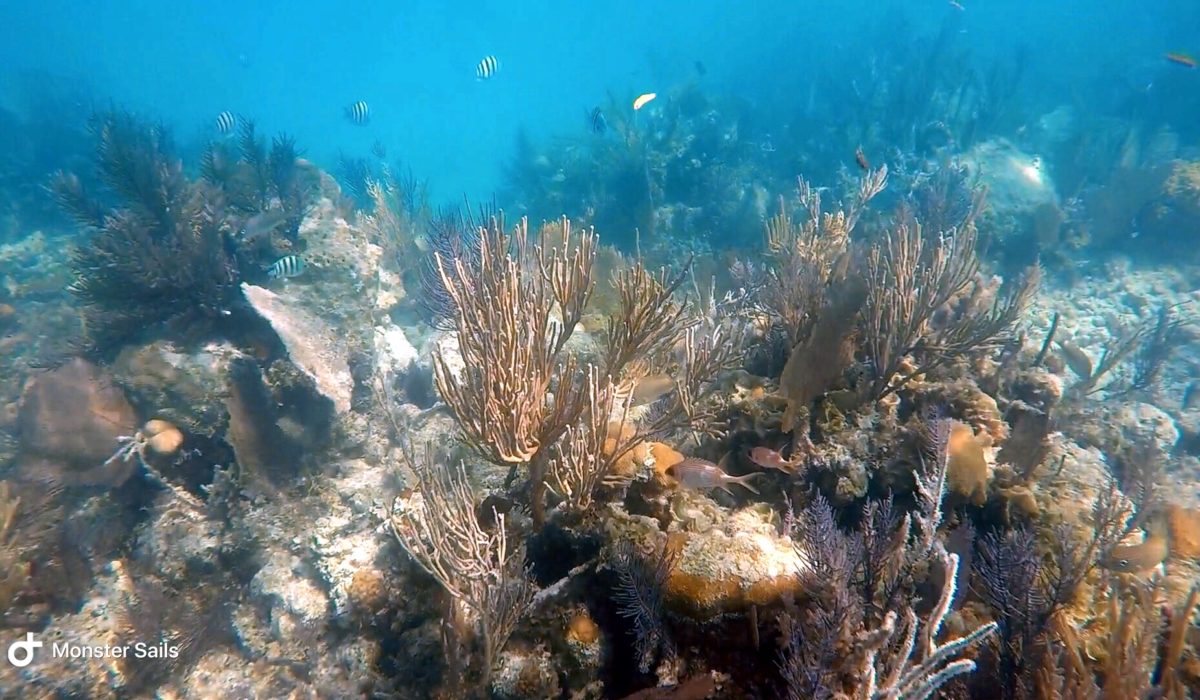
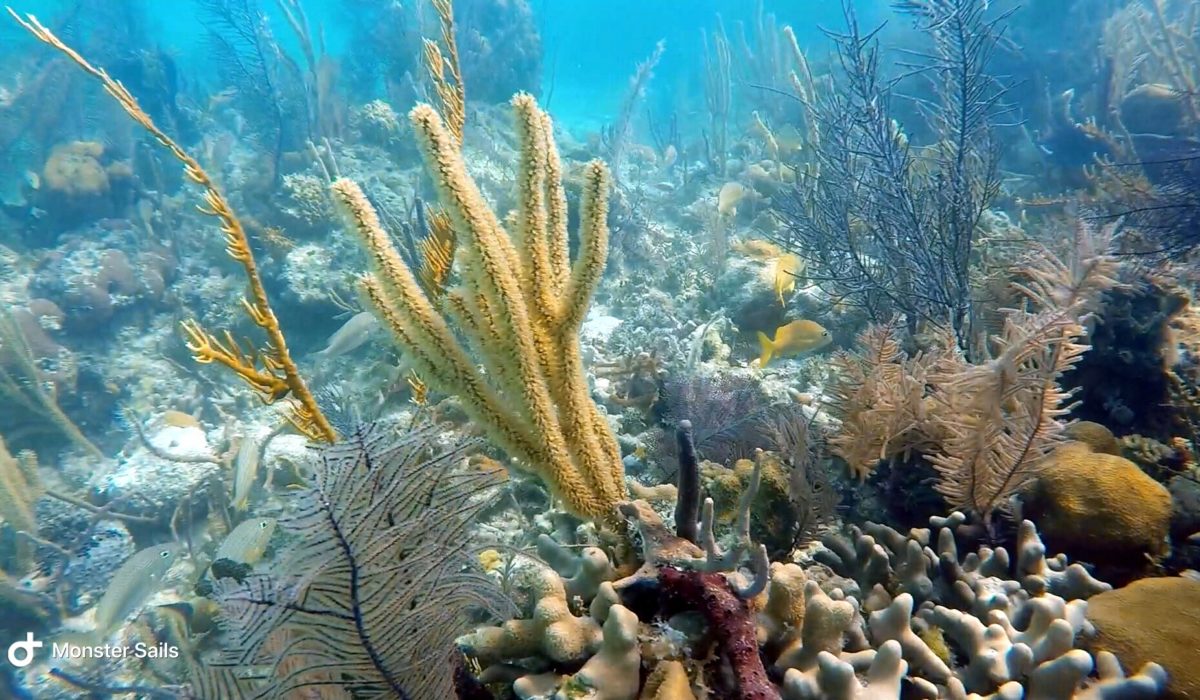
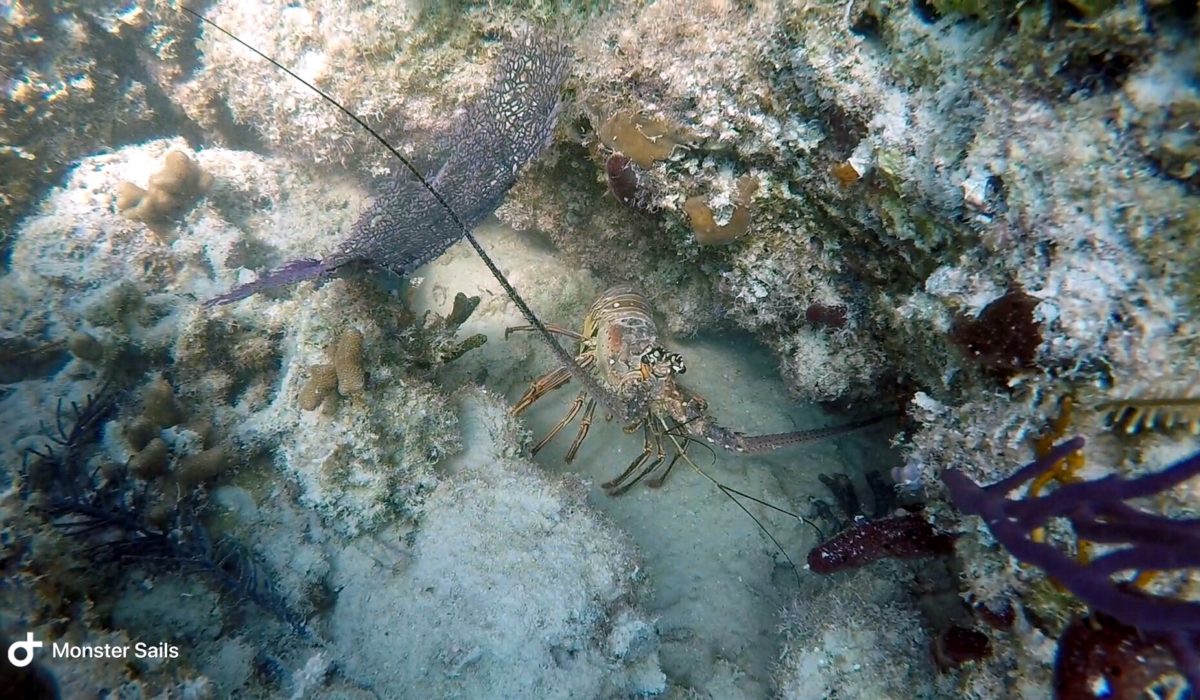
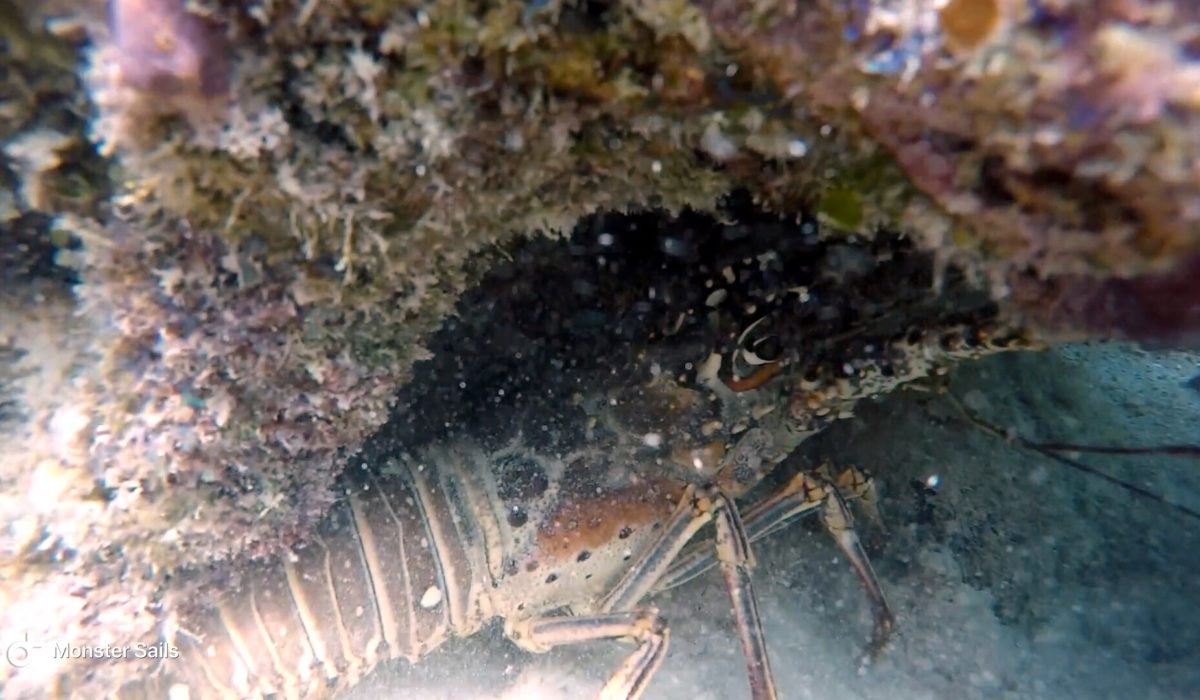
After running out of reef, we head over to another marked snorkel site, known as Black Rock. This site consists of several coral heads in around 10 feet of water. It’s a quick stop, but pretty enough with lots of schooling fish.
Anchoring in ruins
After one night anchored at Goat Cay, we decide to move closer to downtown Georgetown. There is an anchorage right in front of Lake Victoria (the main area), but it seems very exposed. We choose a nearby, protected spot known as Crab Cay or more informally “Ruins Cove.” It is the location of a large resort development that was abandoned and never completed. It is pretty much protected from all directions, making it a calm and safe place to anchor. On our first evening here, someone staying on one of the other boats stops by to chat. He is a wealth of information. It appears that we’ve come across a small “neighborhood” if you will. Two of the other three sailboats anchored, live here somewhat permanently, with one having been in the same spot for about a year. I can’t imagine staying anywhere for a year – but to each their own. We also learn that there is a cruiser’s net at 8 am every morning on Channel 72.
Tangent: A cruiser’s net is basically a scheduled conversation or program on the radio where boats in the area can listen in to discuss things like weather, repairs, activities, etc. There is a designated person who will host the net so as to follow a general schedule and keep everyone organized and on track. We used the net as an opportunity to ask questions about things such as snorkeling sites and where to get our propane tank filled. It did prove to be quite helpful. Now when moving to new locations, if we plan to be there more than a day, we know to ask around about a cruiser’s net.
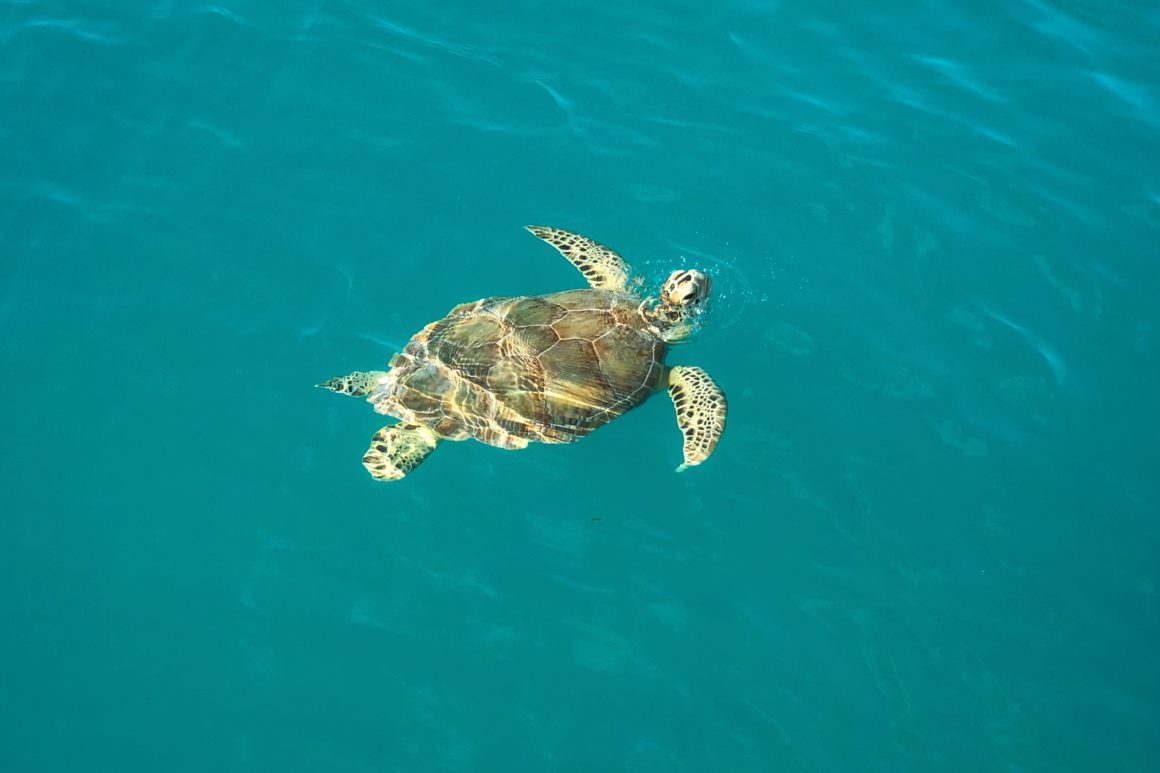
The anchorage is so calm and protected, but as a trade-off, it’s not very pretty and there’s no real beach to speak of. I have to take Monster by paddle board to a small section of sand and rock in order to do her business. There are however turtles in the area to bring some excitement.
Runaway paddle board
The wind has been so light – especially in our anchorage. It’s stifling hot with no breeze. Given that there’s no breeze, though, we feel liberated to leave our paddle boards just lying on the bow (as opposed to tying them up in their holder on the side of the boat). I wake up in the middle of the night around 3 am, worried about the paddle boards – suddenly questioning our bold decision to leave them up front. As if mother nature hears my thoughts, ridiculously strong gusts of wind come through a few minutes later and we hear a loud THUD. It wakes Matt up and I quickly proclaim that was our paddle board (or so I assume). We jump out of bed and race outside to see one of our paddle boards floating away from the boat into the darkness.
After a brief moment, we decide to try chasing it down. We launch the dinghy, grab a spot light and head after it. Small problem – the spot light battery is dead. We are now in the dinghy in almost total darkness under a cloudy sky trying to find our paddle board. Fortunately, it hasn’t made it too far and I’m able to spot it in the distance. Matt drives us up to it and we pull it on-board the dinghy. The wind is so strong that I’m having trouble holding it on the dinghy (we should have brought rope to tie it up behind), but we make it back to Sea Monster all in tack. After several more minutes, we manage to get BOTH paddle boards secured into their rightful place on the boat. Lesson learned.
Our windlass hates us
A few squalls pass through overnight after we retrieved our paddle board, but by morning the breeze is gone and the heat is suffocating again. We decide to head into a marina for a couple nights to get some relief with air conditioning. We begin to pull up our anchor and just before the anchor is about to be lifted out of the sand with the final feet of chain, the windlass stops. My heart drops. This can’t be happening again – I tighten the connection and press the buttons several more times. It’s happening again.
Thinking that we know what the problem is (based on the last time we fixed the windlass), we pull everything out of our port bow locker and Matt tightens the bolt on the electrical spade connector. When finished, I press the windlass buttons again. Still nothing. Matt notices a lot of corrosion on the connections, so we think that must be the problem. He unscrews the bolt and scrapes off all the corrosion before connecting the wires again. Nothing. I’m getting pretty worried at this point. We decide to just pull the chain up with the manual recovery option and investigate more once at the marina. Of course, we’ve got the gypsy (wheel on the windlass) in such a position that we can’t release the metal switch to use the manual recovery. Complete deja vu. After several minutes and a lot of frustrated pounding on the windlass, we remember that if we take the anchor chain off the gypsy, it releases the tension and might allow us to press that stupid metal switch. Easier said than done, but eventually we get it and are able to manually crank the anchor up. Then magically the windlass starts working again for the final few feet.
We make it into the marina and vow to investigate the windlass further the next day. Even though it’s really tempting not to touch it, since it’s technically working at the moment.
Exuma Yacht Club is a deceiving name
The marina we pull into is called the Exuma Yacht Club. Both “Yacht” and “Club” are very generous words to use to describe this place. Let’s be honest – it’s a dump. It has power though, which means we have AC – a small win. I’ll save you from the long rant going through my head about how rude the dock master is and how awful the marina is and how loud the dogs on the next dock are. I will just say that you should google “John McAfee” – the founder of McAfee antivirus software – and read a bit about him. He currently has a large fishing yacht that is tied up at the dock of this marina, complete with a security team and 4 very large (aforementioned very loud) dogs. He is literally crazy, but his twitter feed is entertaining. Fortunately, our other neighbors were a nice couple on a Leopard 48. They got stuck here when the fuel pump randomly stopped working (during our refuel), and didn’t start working until two days later. Never a dull moment at the Exuma Yacht Club.
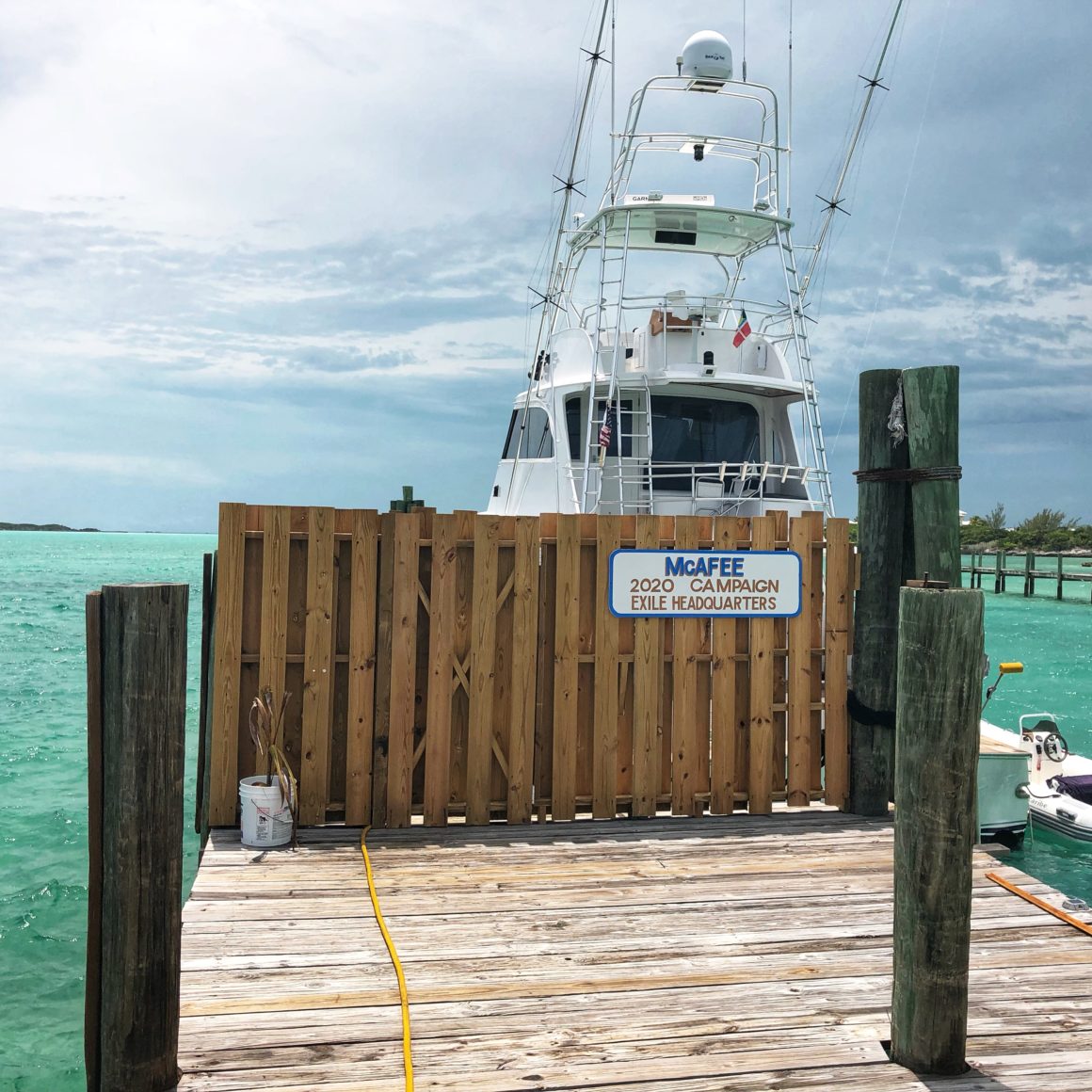
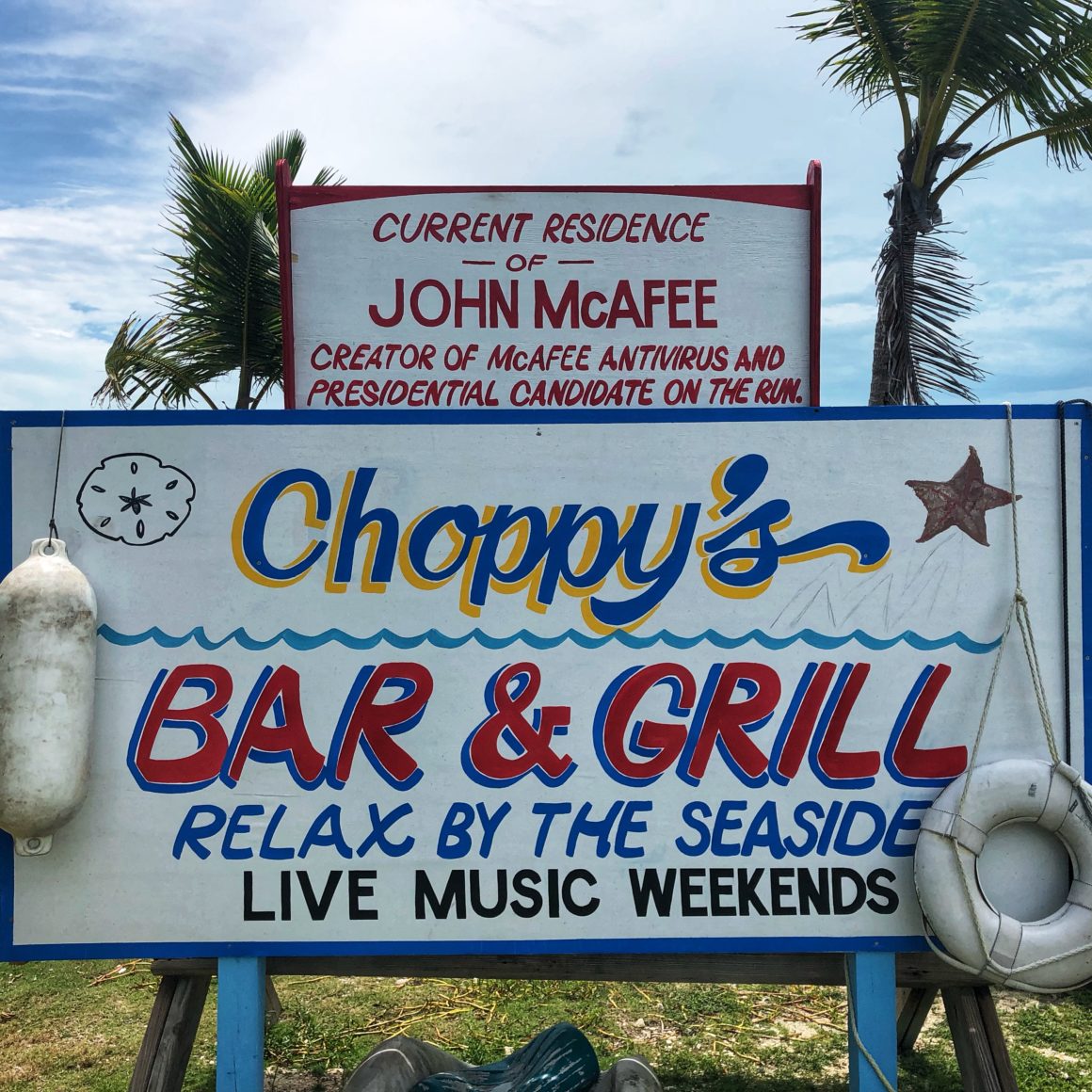
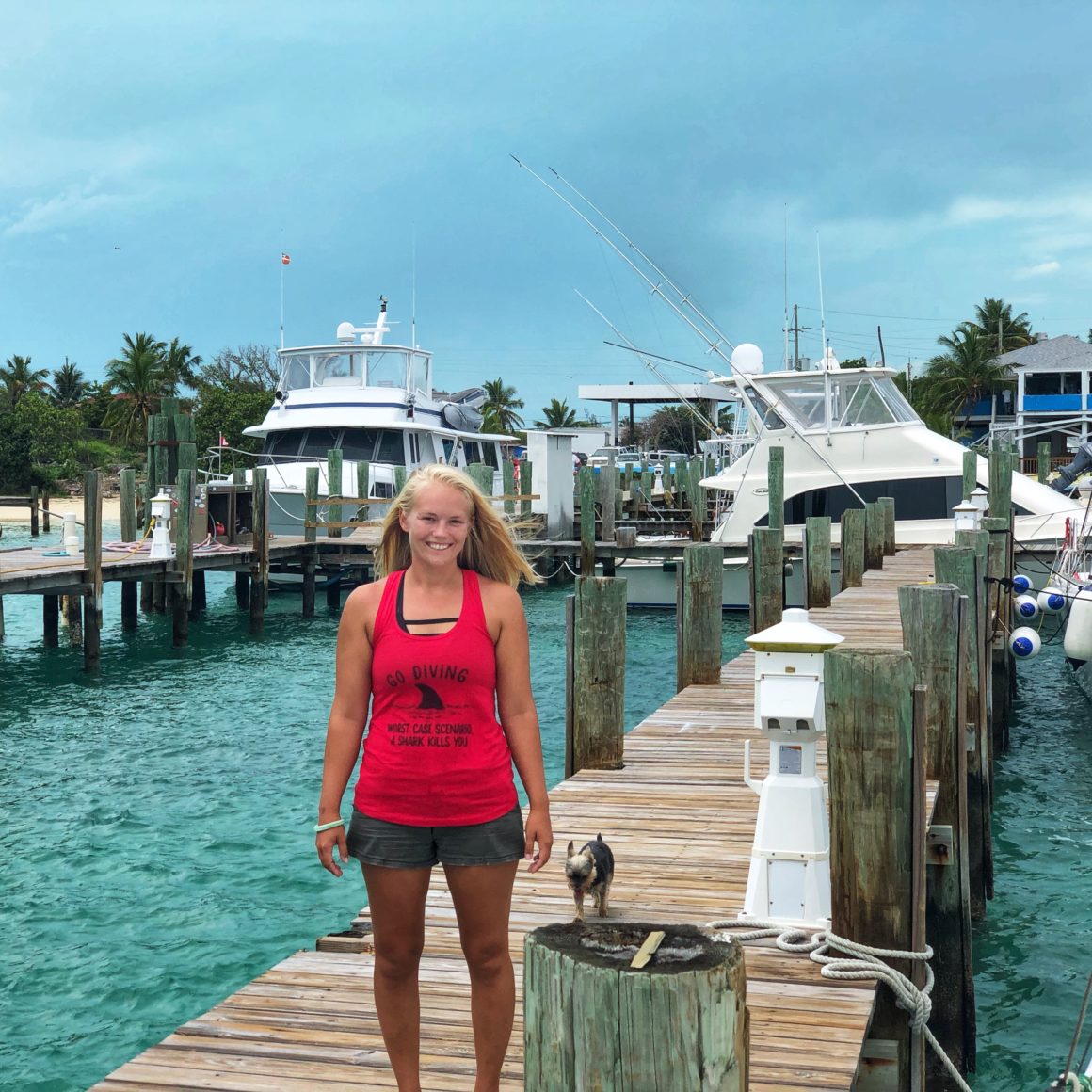
A silver lining to our stay at the marina, though is that we were able to locate free wifi. No, not from the marina which advertises free wifi but is actually only available sometimes when standing outside the office door. We found free wifi offered by BTC as a promotion during a recent regatta (e.g. boat race) that was accidentally never turned off. We walk over to the BTC store and one of the employees is nice enough to give us the password despite being surprised to hear the network is still online. It’s fast wifi too – so we can stream TV shows!
Troubleshooting the windlass
After putting it off for over a day, we decide its time to take a look at the windlass. I give my dad a call, thinking he might have some magical (read – obvious) insight as to what could be wrong. After some insightful information, we are thinking it’s possible the motor is starting to go bad – perhaps a section of the motor brushes. This might explain why sometimes the windlass works and sometimes it doesn’t (when stopped on the “dead” spot of the motor). We try pressing the windlass button – it’s currently not working, again. We manually turn it about a quarter of a turn and try again – it works! Thinking that we’ve found the problem, we thank my dad and begin looking at what it would cost to just replace the entire windlass motor.
Since the windlass is working again, and we are pretty sure we know the culprit, we feel confident that we can operate it enough to get by for the time being. Having enough of the crappy dock and loud mutts, we decide to head across the channel to Stocking Island and anchor. We find our spot and successfully drop our anchor. After making sure we have a strong set, I go to put on the bridle and lower more chain into the water.
Tangent: The bridle consists of two large pieces of rope, one coming off the front of each of our hulls and then coming together – so forming a triangle shape. You then clip the bridle (think the tip of the triangle) onto the anchor chain. Now when the boat is pulling taunt against the anchor, that load is distributed evenly between both hulls thanks to the bridle. I’m sure there are lots of reasons why this is better for the boat, but mainly for us this is a means to better keep us facing directly into the wind and it prevents the anchor chain from rubbing under the hulls.
Surprise – the windlass isn’t working again. No problem – I manually turn it a quarter of a turn, and try again, fully expecting it to work. Spoiler – it doesn’t. I try everything. Nothing works. We think that the motor must have completely died on us at this point. Luckily we do have a well-set anchor, so we manually let out enough chain for the bridle and figure we might be in this spot for a while.
The next morning is Saturday and we can’t reach anyone from Lewmar (maker of our windlass) or the part distributor until Monday. Being antsy, we decide to try some more troubleshooting – just to make sure our motor is really dead. We call my dad again and locate our multi-meter tool (thank you to the previous owners for leaving it for us). After a few quick checks, we decide we definitely need to get access to the windlass motor and solenoid to do any further troubleshooting. Nothing is ever easy, though. We don’t have the right tool to do this given the crazy tight spot the allen key bolts are located in. We spend a couple hours trying to remove the bolts and motor housing with all sorts of tools. Eventually, I call around to a couple shops and locate one that might have what we need to create a make-shift ratcheting allen wrench. We take the dinghy over, pick up a few different things, and then come back to try again.
Finally we’ve gotten three of the four bolts removed, but just simply cannot get the fourth bolt to budge or even turn a bit. Frustrated, we decide to remove it with any means possible. Finding an old multi-drill on-board with a circular blade attachment, Matt cuts through the bolt. At least the stupid housing is off. Now we are able to see the wiring actually going into the motor along with the solenoid. Over the phone, my dad walks us through how to test each component and jump across different wires and the solenoid. That was pretty exciting – all we need is a screwdriver and a little courage and we can operate the windlass by what I think of as hot-wiring it! There’s a lot of sparks flying with that type of operation though – not ideal. After a bunch of testing and mechanical nonsense, we determine that our solenoid is good (yay!) and our motor which we thought was completely dead is actually completely fine (double yay!). The issue resides within the electrical wiring – so basically back to the original issue we thought it was. Boat projects sure are fun.
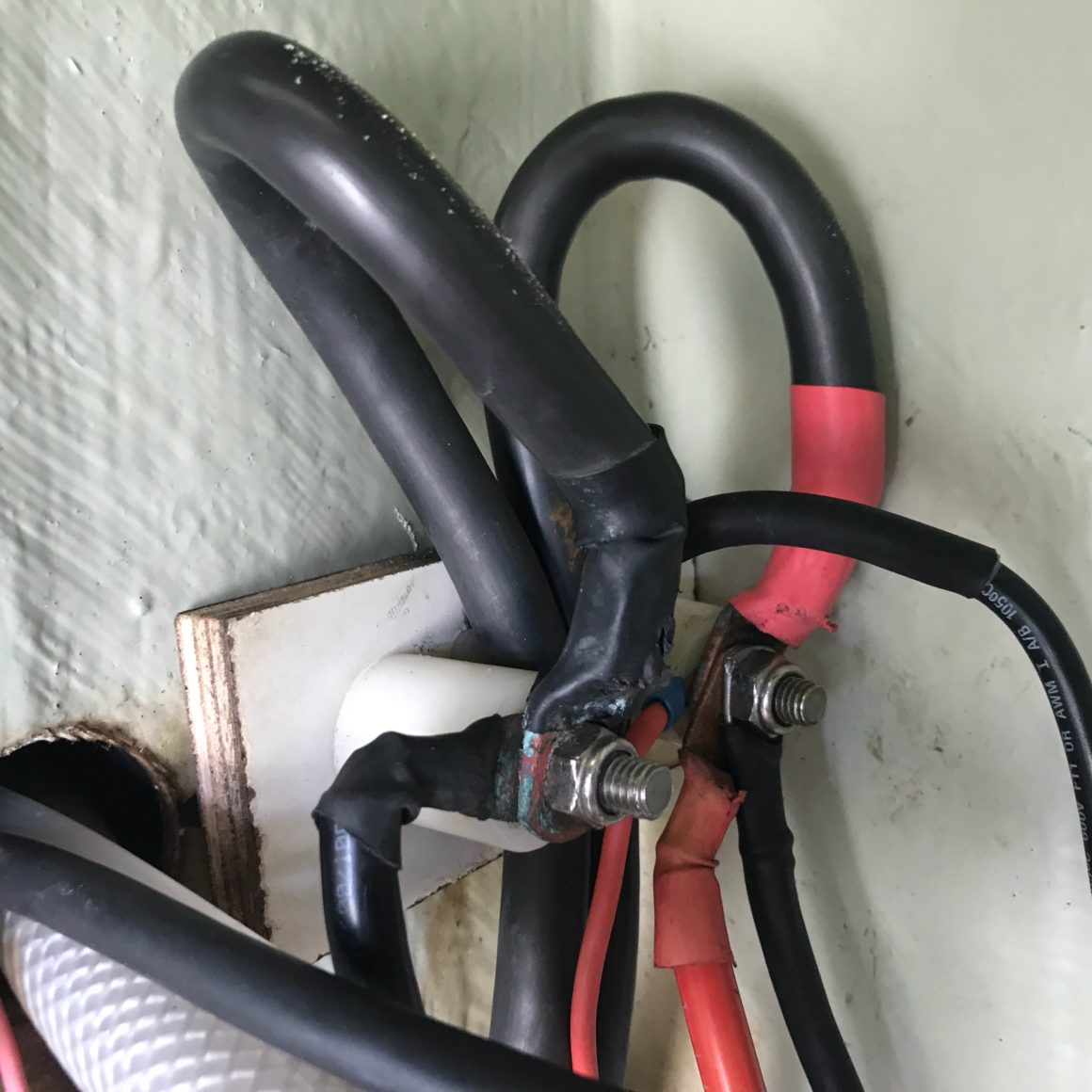
Spade connectors 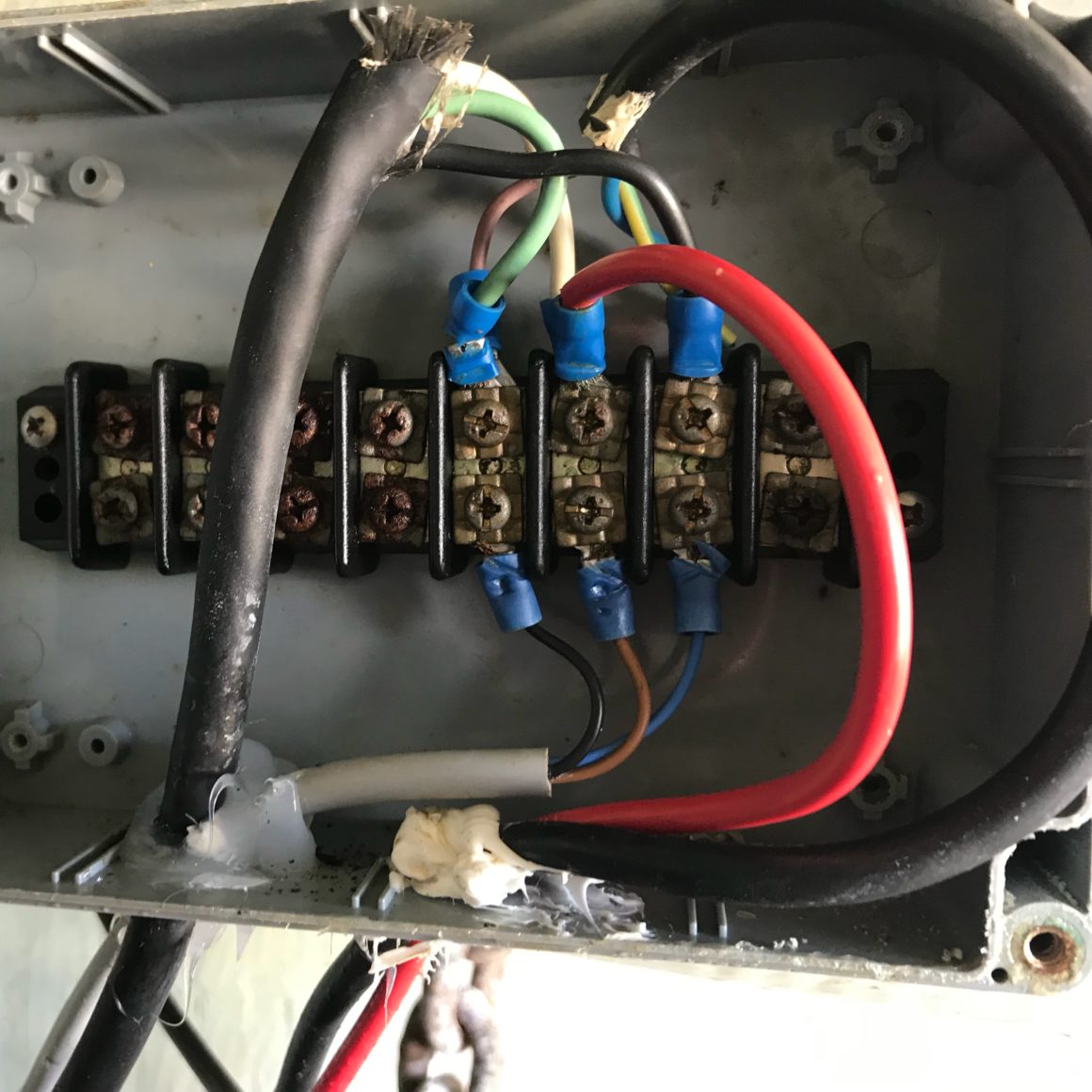
Power wasn’t getting supplied to this bus as needed 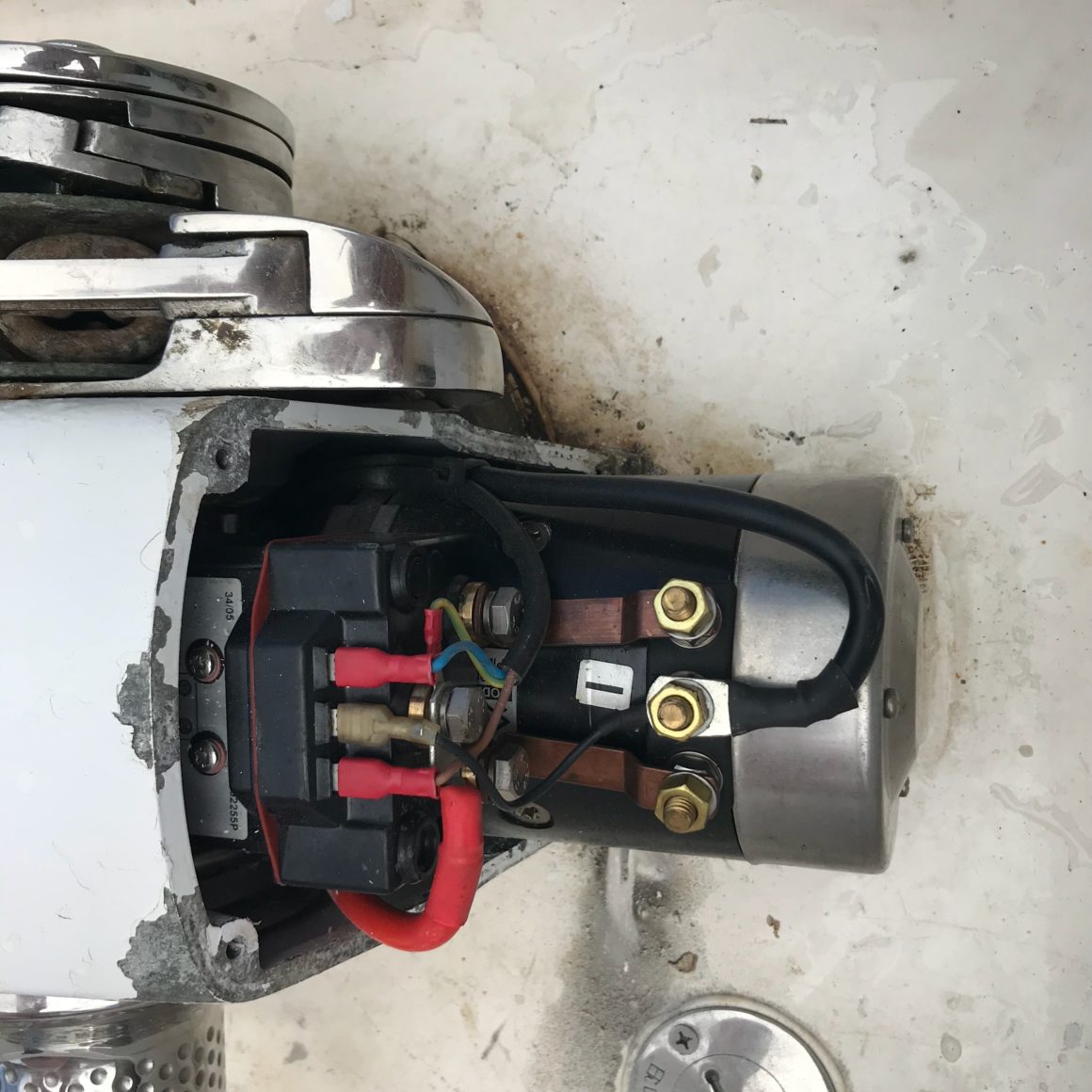
Solenoid and motor once the housing was removed
Sometime soon, Matt plans to write a nice detailed blog post about the troubleshooting we did and all our lessons learned. But to save most of you from the agony – the short conclusion is that we traced a bunch of wires and found one spot that was corroded. We cut off the corroded wire, spliced it back together and voila! our windlass is working again!
To celebrate, we drive the dinghy back over to the restaurant we got pizza from the first night and order a pizza to-go. It’s about a 20 minute ride by dinghy each way given the waves, but completely worth it. We’re celebrating! Plus, the pizza is way better this time after we crisp up the crust some more in our oven.
Chat ‘N Chill
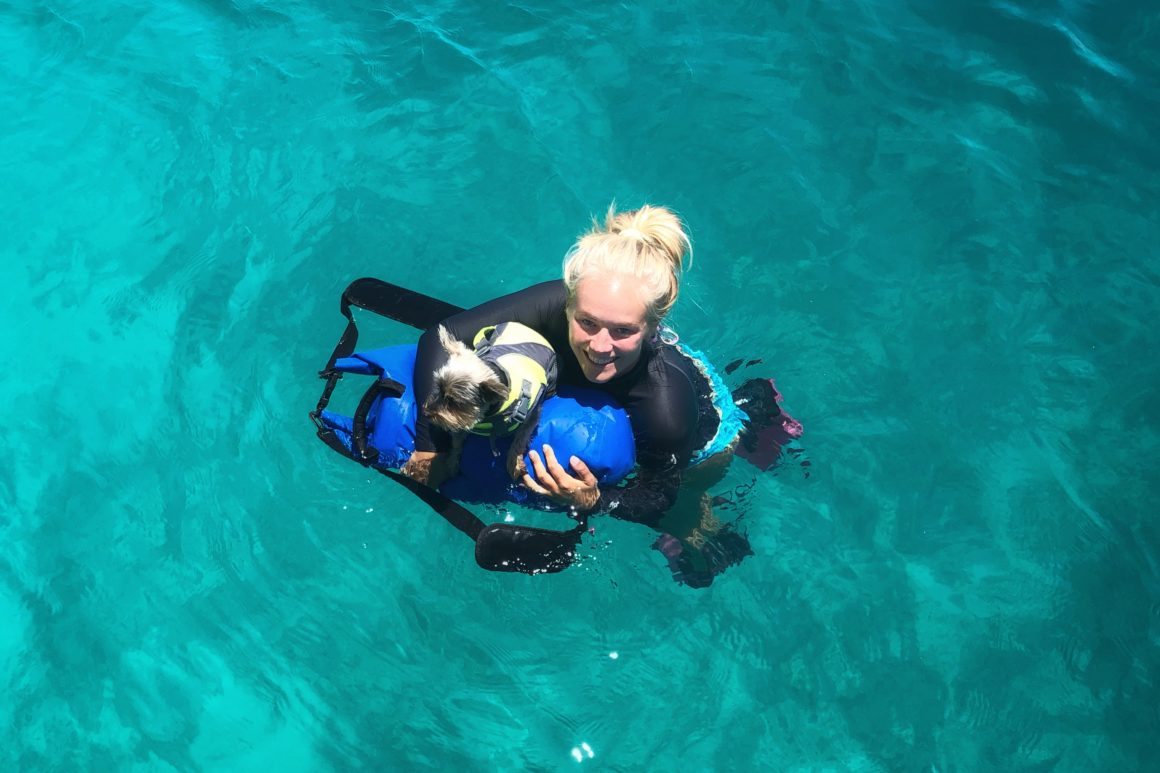
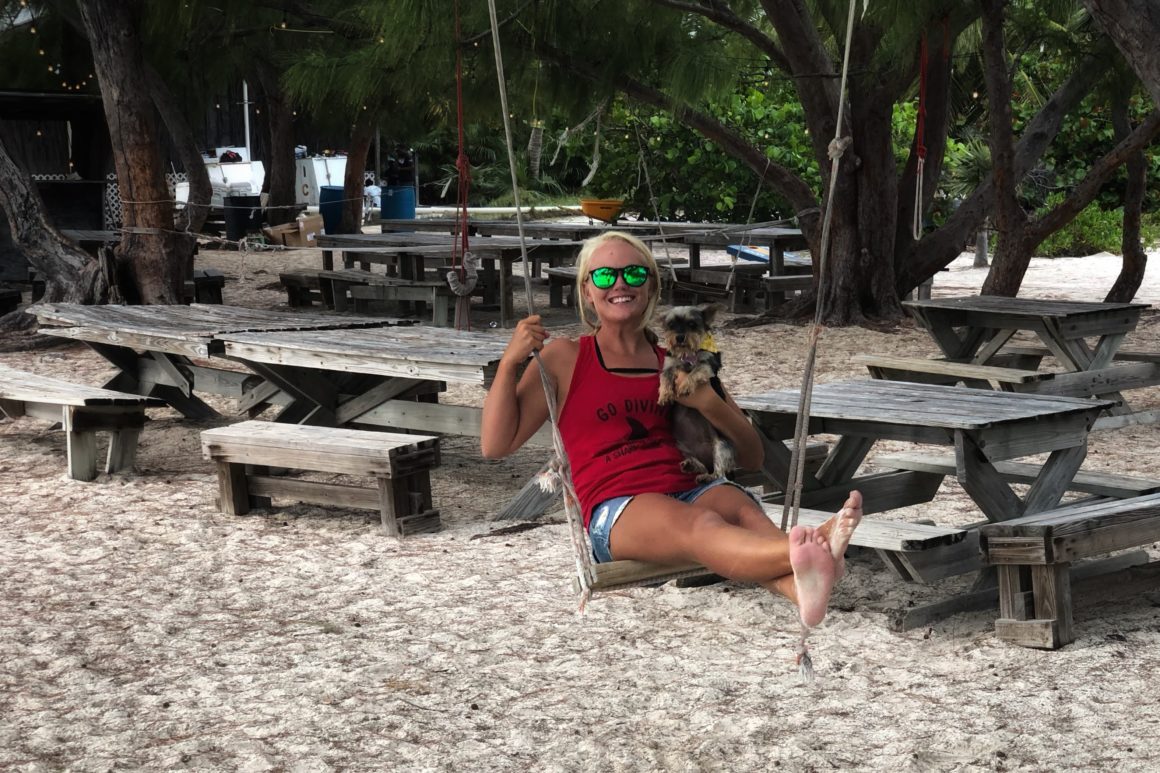
The Chat ‘N Chill is an infamous cruiser’s beach bar/restaurant that is only accessible by boat, located on Stocking Island just across from Georgetown. We are anchored right in front of it, and now that we got our windlass working – we can actually enjoy it! Given how close we are to the beach, Monster and I decide to swim into shore. I put her life jacket on and then blow up our dry bag for extra flotation and we set off. I may have underestimated the distance, especially when swimming against the wind, because I’m flat exhausted by time we make it to the beach. We do make it, though.
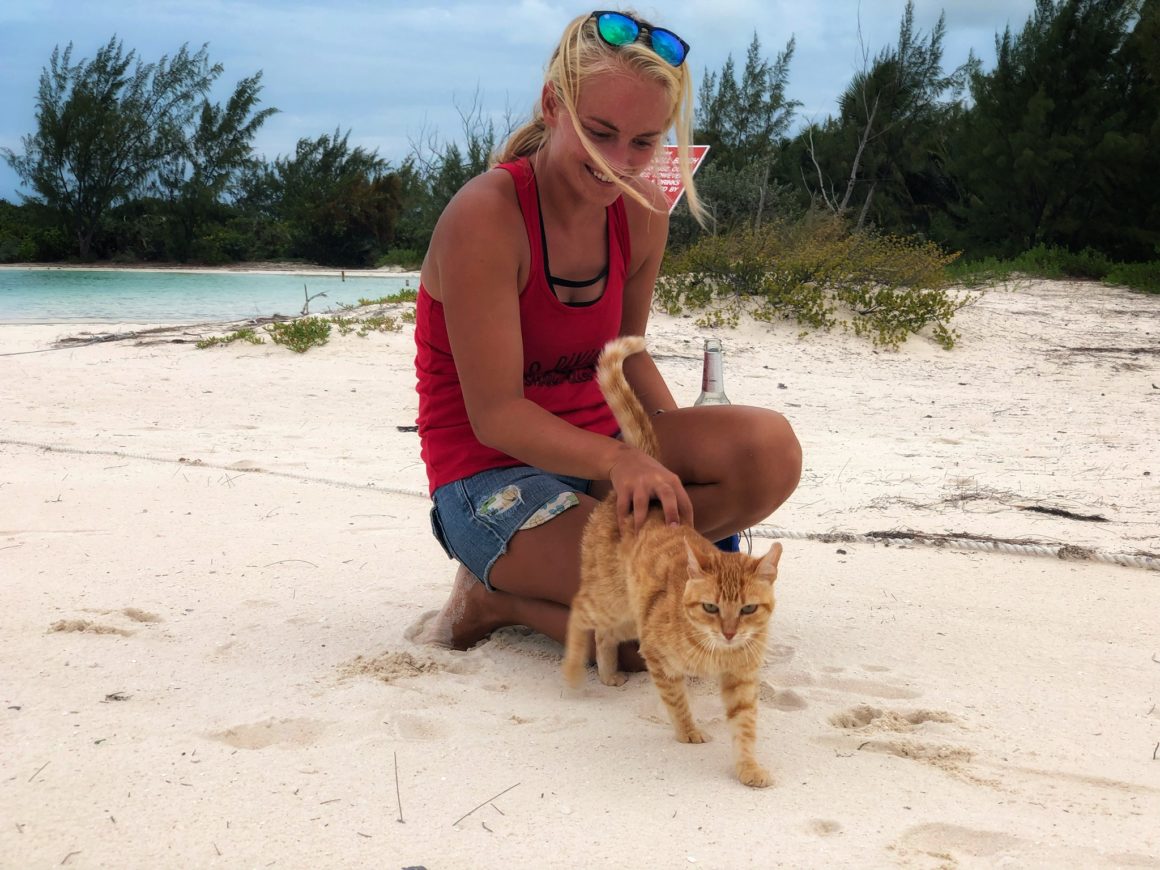
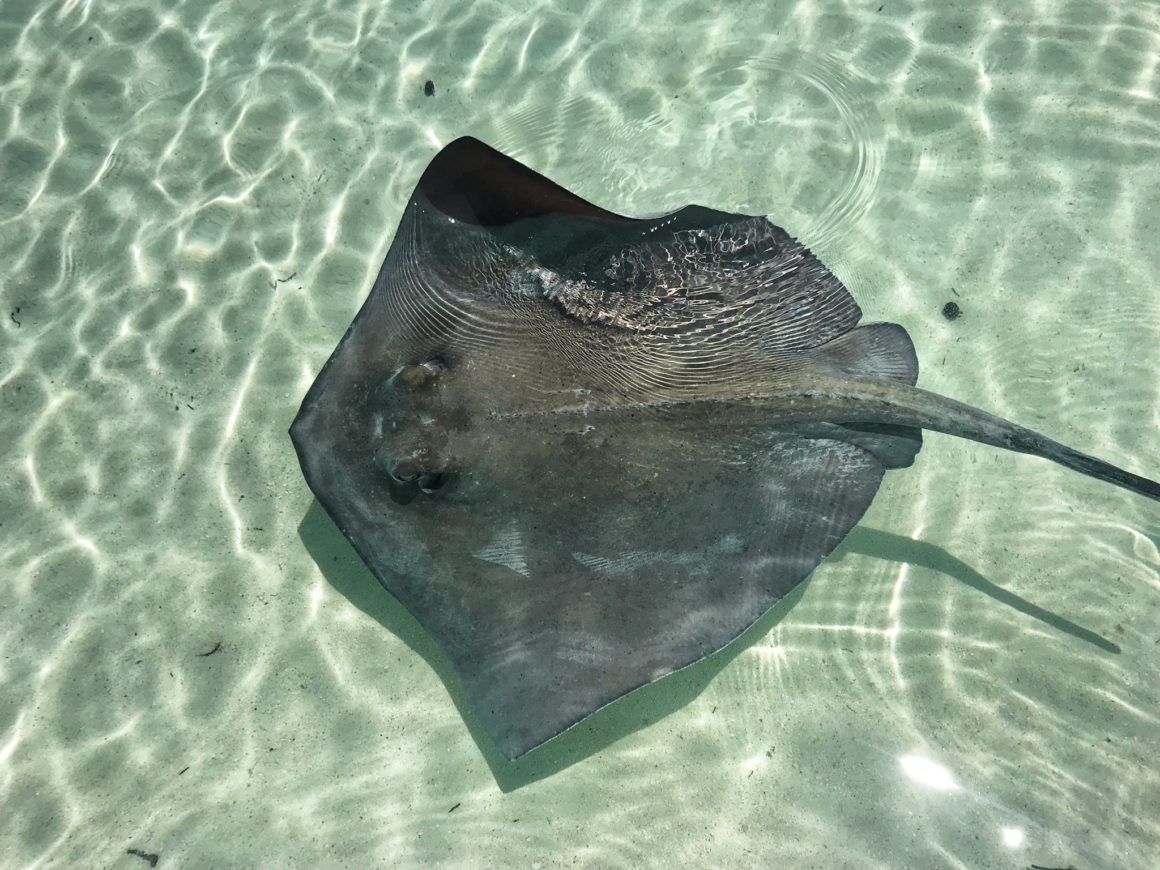
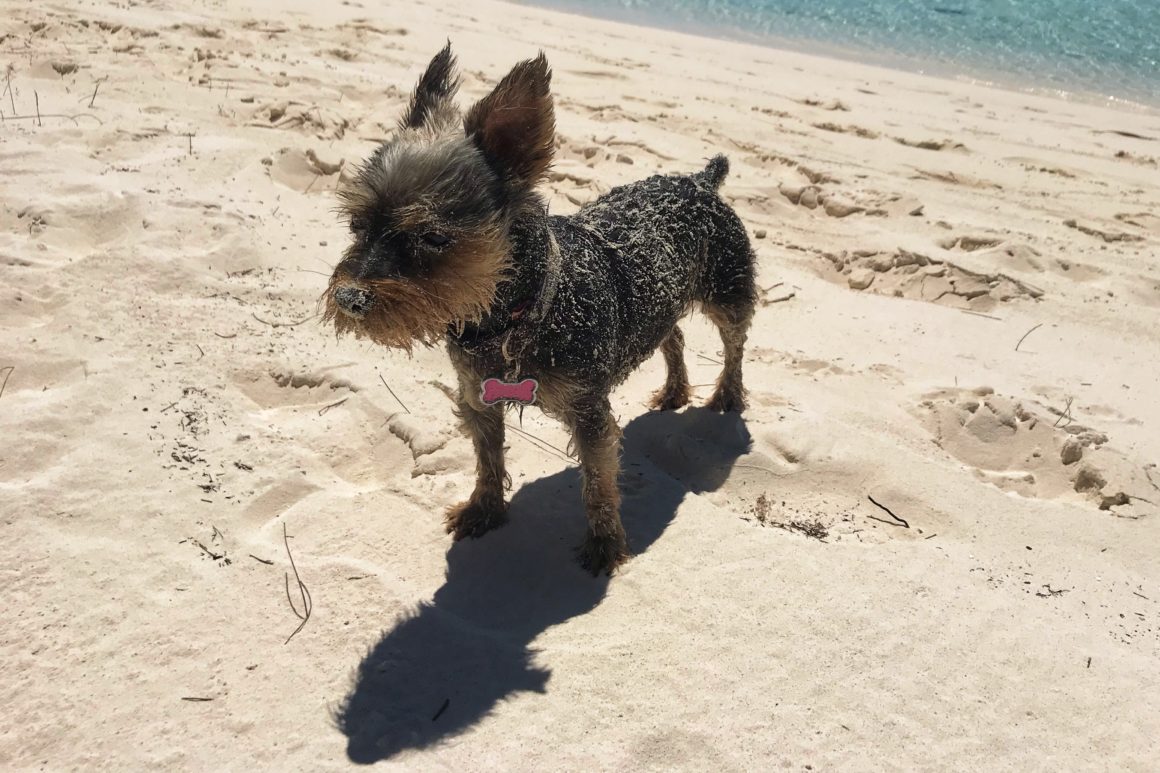
During the day, there are always lots of cruisers and tourists alike surrounding the Chat ‘N Chill. Most of which, today, are quite amused at Monster’s entrance onto the beach. She runs around for a while, making friends, giving smiles, and rolling in way too much sand. She thinks about chasing some of the resident cats on the island, but when they stand their ground she quickly changes her mind. I take her into the water to rinse off the sand and check out the friendly sting rays that hang around. Once we’ve both had enough fun, we put on our gear and swim back to the boat.
Goodbye Georgetown
Emboldened by our well-functioning windlass, we decide to pick up anchor that evening and head over towards the main Georgetown anchorage. The final episode (ever apparently) of Game of Thrones had aired recently and Matt was desperate to watch it. Thanks to our friends at BTC and our booster, we were able to access the free wifi from the anchorage there – gotta enjoy the small victories! Tomorrow morning we are finally going to leave this place and head to Long Island!

2 comments
Hi Jordan,
I was searching Google to find info on Exuma Yacht Club status and came across your blog. Didn’t know John McAfee has a gated community on the dock (lol). Must be friends with ex-Formula 1 driver Eddie Irvine who owns the place. Love your details about BTC’s free WiFi, fixing windlass, Chat’N’Chill, getting Monster to shore.
Keep writing! If you have more trouble, want advice, help, etc. give us a holler. : +1 (242) 677-1217 or +1 (242) 423-3700
Cheers,
Bob
Nassau, Bahamas
Country Manager—Bahamas, Waterway Guide
Thanks Bob – appreciate it! We are back in the US for hurricane season, but excited to get back out to the Bahamas and Caribbean this winter!